Proof · real AI Studio production output

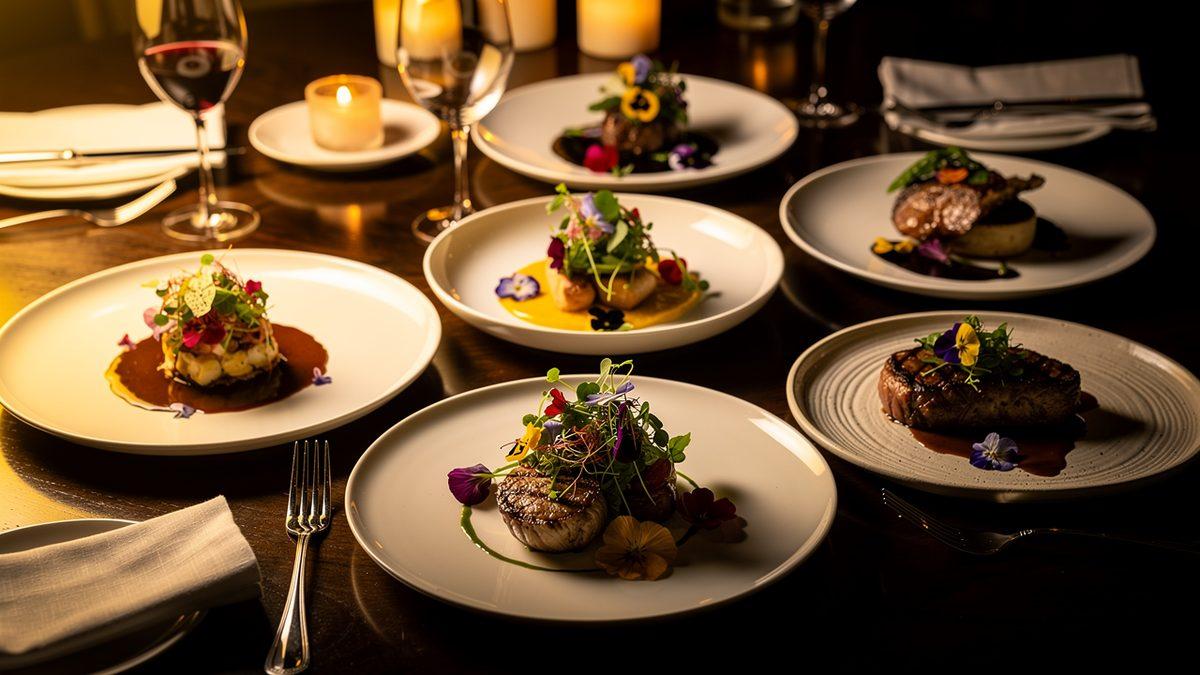
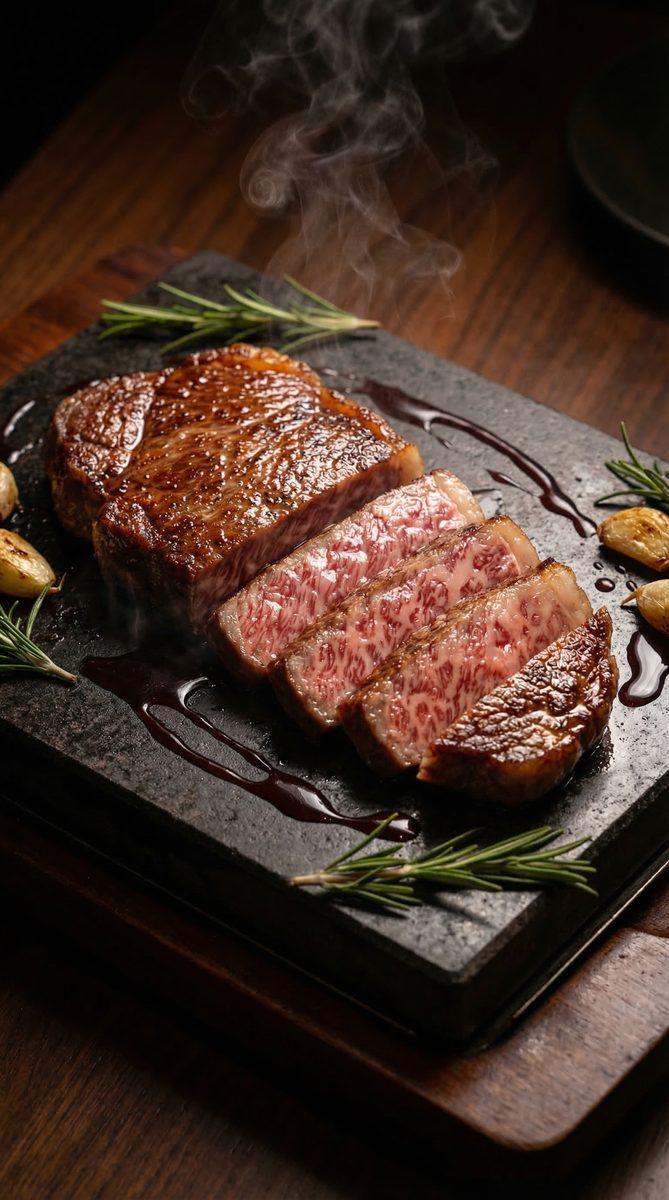
Campaign-grade imagery generated, art-directed and quality-controlled in-house — the production standard this guide describes. More on the portfolio.
On this page
Why are enterprises industrialising AI creative production?
Industry surveys through 2026 put generative AI use in enterprise marketing functions at roughly nine in ten organisations, with around 80% of creative professionals using AI somewhere in their process. What changed in the past year is not adoption — it is industrialisation. Enterprises are moving from scattered individual tool use to governed production systems: locked brand references, named approval gates, security controls and measurable output.
The pressure is coming from three directions at once. Content demand keeps compounding — five platforms, per-market variants, weekly ad iteration. Traditional production economics cannot follow; agency batches of 15–25 assets a month at multi-week turnarounds are an order of magnitude away from what always-on brands consume. And the tools crossed the commercial-quality threshold, which moved the bottleneck from "can AI make this?" to "can our organisation approve this at scale?" — a governance and workflow problem, not a technology problem. That reframing is the core of this guide.
What does the enterprise AI creative stack look like in 2026?
The current production stack has three layers:
| Layer | What it does | Current examples |
|---|---|---|
| Generation models | Produce imagery and video against locked references | Image: GPT Image 2, Nano Banana Pro. Video: Kling 3.0, Seedance, Veo 3.1 |
| Orchestration | Briefs, reference locking, batch generation, versioning | Agency-built pipelines; model hubs with enterprise access |
| Governance layer | QC gates, approvals, provenance labelling, audit trail | Human review workflows, C2PA Content Credentials, asset management |
Two practical notes. First, model choice matters less than reference discipline: a locked brand system produces more consistency gain than any single model upgrade. Second, the model landscape turns over every few months — an enterprise should buy an adaptable pipeline and the governance around it, not a specific model. That is the reasoning behind the agency model we describe in our enterprise AI creative agency service.
What does responsible AI mean for creative work in Singapore?
Singapore has the most developed voluntary AI governance stack in the region, and it increasingly shapes what enterprise procurement asks creative vendors. Three instruments matter:
- IMDA's Model AI Governance Framework for Generative AI (2024) — covers hallucination, bias, IP, content provenance and security for generative systems.
- The Model AI Governance Framework for Agentic AI — launched January 2026 and updated in May 2026 with case studies from more than 50 organisations; the first national framework for autonomous, multi-step AI agents, and directly relevant once creative operations start using agent workflows.
- AI Verify — the national testing and assurance framework, now moving into public-sector procurement standards, which tends to pull private-sector expectations along with it.
None of these are binding law for private creative work — PDPA remains the binding data-protection baseline — but together they define what "responsible" looks like in writing: human accountability for AI output, disclosure where it matters, and provenance labelling. The full treatment, including C2PA Content Credentials and the EU AI Act's transparency requirements, is in our responsible AI for enterprise creative work explainer.
How do enterprises keep AI creative production secure?
Creative production handles unreleased products, campaign strategy, licensed talent imagery and sometimes personal data. The security questions are concrete: which tools see the data, whether inputs train anyone's models, who can access brand assets, and what gets retained after delivery. The short version of good practice — enterprise-tier AI tooling with no-training terms, an approved-tool registry to prevent shadow AI, PDPA-aligned handling of personal data, and agreed retention — is expanded into a full vendor due-diligence checklist in our AI security guide for enterprise creative teams.
What does the production workflow actually look like?
Enterprise AI creative production runs as a seven-stage loop: brief and brand lock, reference lock, generation, creative QC, consolidated client review, compliance sign-off, delivery and asset management. Two design choices carry most of the weight. Approved assets are never regenerated — variants derive from the approved master, which is what keeps a 500-asset library coherent. And client review runs as consolidated annotation rounds with an agreed fix-round structure, which is what keeps five stakeholders from turning production into an infinite loop. The stage-by-stage detail, including who signs each gate, is in the enterprise AI creative workflow, step by step.
Who does what in an enterprise AI creative team?
| Role | Owns | Human or AI-assisted |
|---|---|---|
| Creative director | Brand judgment, campaign concept, final creative call | Human |
| AI producer | Pipelines, reference locks, generation batches, versioning | Human running AI systems |
| Brand guardian | Consistency QC against the locked brand system | Human with AI-assisted checks |
| Compliance reviewer | Disclosure, provenance, legal and regulatory gates | Human |
| Automation engineer | Agent workflows for routing, approvals, publishing | Human, governed under the agentic-AI framework |
An agency partner supplies most of these roles as a service; the enterprise keeps brand authority and final sign-off. What the enterprise should never outsource is the decision about what "on-brand" means.
How should an enterprise choose an AI creative vendor?
Evaluate the system, not the showreel. Capability proof should be live and recent; governance and security answers should arrive in writing without hesitation; the workflow should be explainable stage by stage, with named human gates; and the commercial model should start with a bounded pilot. We've turned this into a scoring matrix and twelve RFP questions in the enterprise AI agency procurement guide. For the search-visibility side of vendor selection, the criteria in the Enterprise AI Search Visibility guide apply unchanged.
What does the pilot-to-scale path look like?
The pattern that works is deliberately unheroic. Pick one brand and one defined asset set — a campaign's stills, one product line's content, one market's social engine. Agree success metrics before generation starts: consistency pass rate at QC, approval-round count, cost per approved asset, cycle time. Run 4–6 weeks. Then scale along one axis at a time — more categories, then more markets, then automation of the operational loop. Enterprises that scale two axes at once usually discover their approval workflow was the real constraint, in production, with a live campaign attached. The pilot exists to discover that safely.
Frequently Asked Questions
Is AI-generated creative work actually good enough for enterprise campaigns?
For most commercial formats — product and lifestyle imagery, social video, UGC-style content, explainer video — yes, current-generation models produce work that passes blind quality review when run through a governed pipeline with human QC. The honest caveats are complex multi-person scenes, precise product-detail fidelity on some categories, and anything requiring real-world documentary truth, where hybrid or traditional production still wins.
Do we need our own AI governance framework before starting?
No — a pilot under a vendor's documented controls is a legitimate way to learn what your own framework needs to cover. But by the time you scale, your organisation should own its disclosure policy, its approved-tool registry and its sign-off gates, informed by IMDA's frameworks rather than copied wholesale from them.
How is this different from just giving our in-house team AI tools?
Individual tool use gets individual-scale results and individual-scale risk: inconsistent output, unclear data handling, no audit trail. The enterprise gain comes from the production system — locked references, QC gates, provenance, an approval loop that scales. Some enterprises build that in-house over time; an agency partner is the faster route to a working system you can learn from.
What should a pilot cost?
In Singapore, a defined-scope enterprise pilot typically starts from around S$5,000 for a 4–6 week engagement with an agreed asset set and success metrics. Ongoing production engines run from about S$5,000 to S$20,000+ a month depending on volume, markets and governance reporting requirements.
Does using AI creative production affect our visibility in AI search engines?
Indirectly, yes — volume and structure help. Publishing more well-structured, machine-readable content increases the surface AI engines can cite, provided the content is engineered for citation. That discipline — AEO and GEO — is separate from creative production but pairs naturally with it; see the Enterprise AI Search Visibility guide for the full method.
Related reading
- Enterprise AI creative agency service
- Responsible AI for enterprise creative work
- AI security for enterprise creative teams
- The enterprise AI creative workflow, step by step
- Enterprise AI agency procurement: the RFP guide
- Enterprise AI search visibility: the Singapore guide
- AI for business in Singapore: the complete guide
- Why Singapore brands are switching to AI creative agencies
Ready to run enterprise creative at AI scale?
AI Studio runs governed AI creative production for enterprise brands across Singapore and Asia — locked brand systems, named approval gates, documented security. Start with a readiness review of your current pipeline.