In this guide
- Choose frame shape from audience context and story geography, not habit.
- Block faces, props, eyelines and captions for a readable vertical frame.
- Review landscape as a composition choice, not a stretched or cropped duplicate.
Select the frame before locking the storyboard
Start with the audience, destination and story action. If most viewing is planned on a phone, a vertical-first storyboard can keep faces, hands and a single prop legible without forcing the viewer to search across a wide frame. A landscape composition can be stronger when the scene depends on distance, several people or a location that explains the conflict. Decide what the first frame must tell the viewer and where the turning choice will sit.
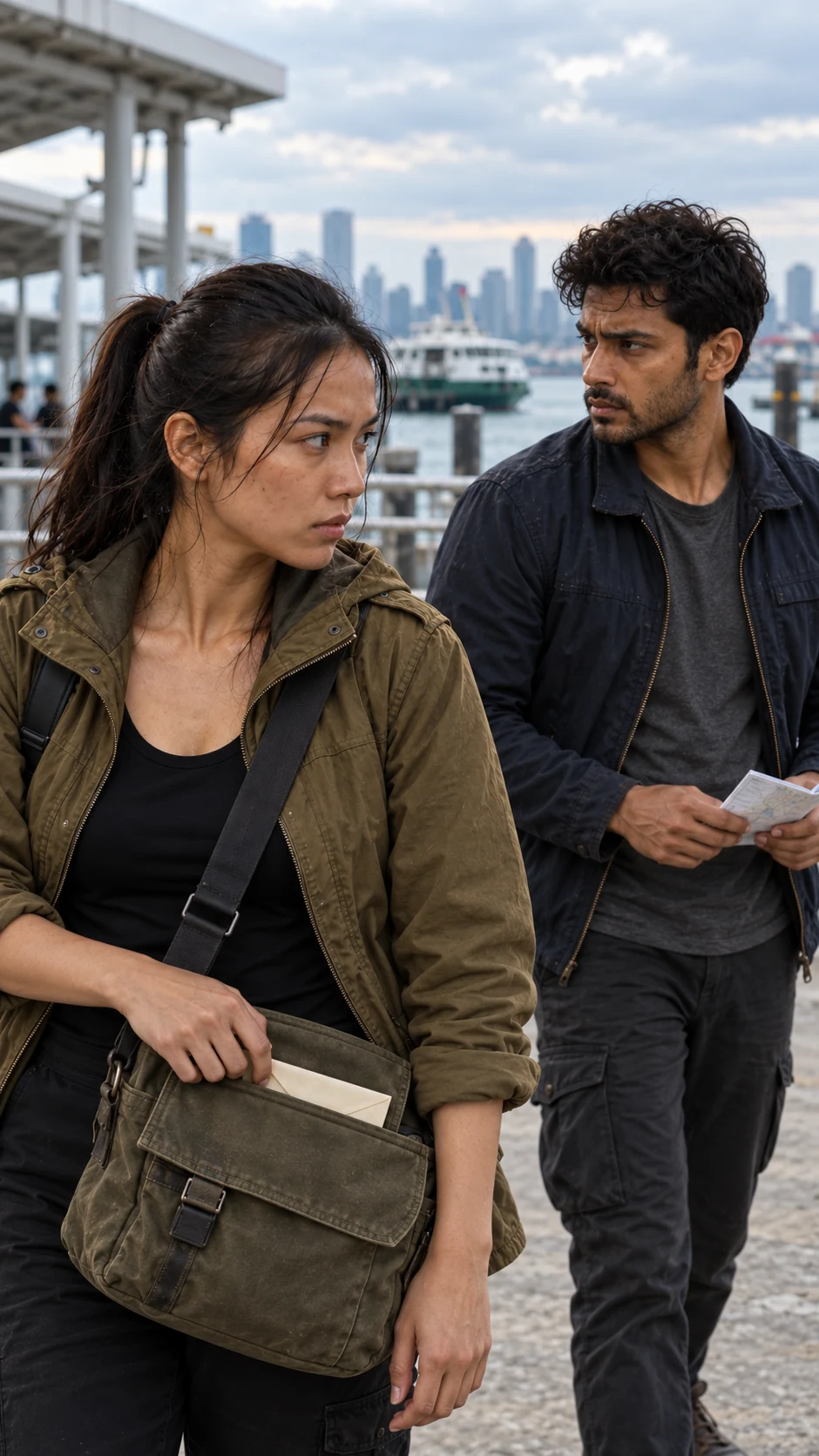
For Last Ferry, the central object is a sealed envelope and the conflict happens between two rival couriers at a dock. A 9:16 frame can place Maya and Arjun on different planes, keep the envelope visible and use the pier sign to establish direction. A 16:9 version may give more room to show the route to the ferry gate. These are planning decisions, not a claim that one frame format performs better. For the broader choice between a one-off story and an episode chain, see how to choose a film or series form.
If a buyer needs both ratios, mark those scenes before writing the shot list. A scene may share dialogue but need a second establishing image, a different two-shot or a new prop insert to preserve its meaning. List the frame-specific information beside each beat so the crew and editor know whether they are making two compositions or one master with a safe alternate crop.
Block 9:16 around faces, hands and one clear action
In a vertical frame, reserve a readable path from the character’s face to the object that carries the beat. Establish where each character stands, how much headroom is needed, and what part of the environment gives orientation. Keep hands and props inside the useful frame when a clue or handoff matters. Captions and platform controls may occupy portions of the image; confirm the current delivery requirements for the intended destination before finalising typography and lower-frame action.
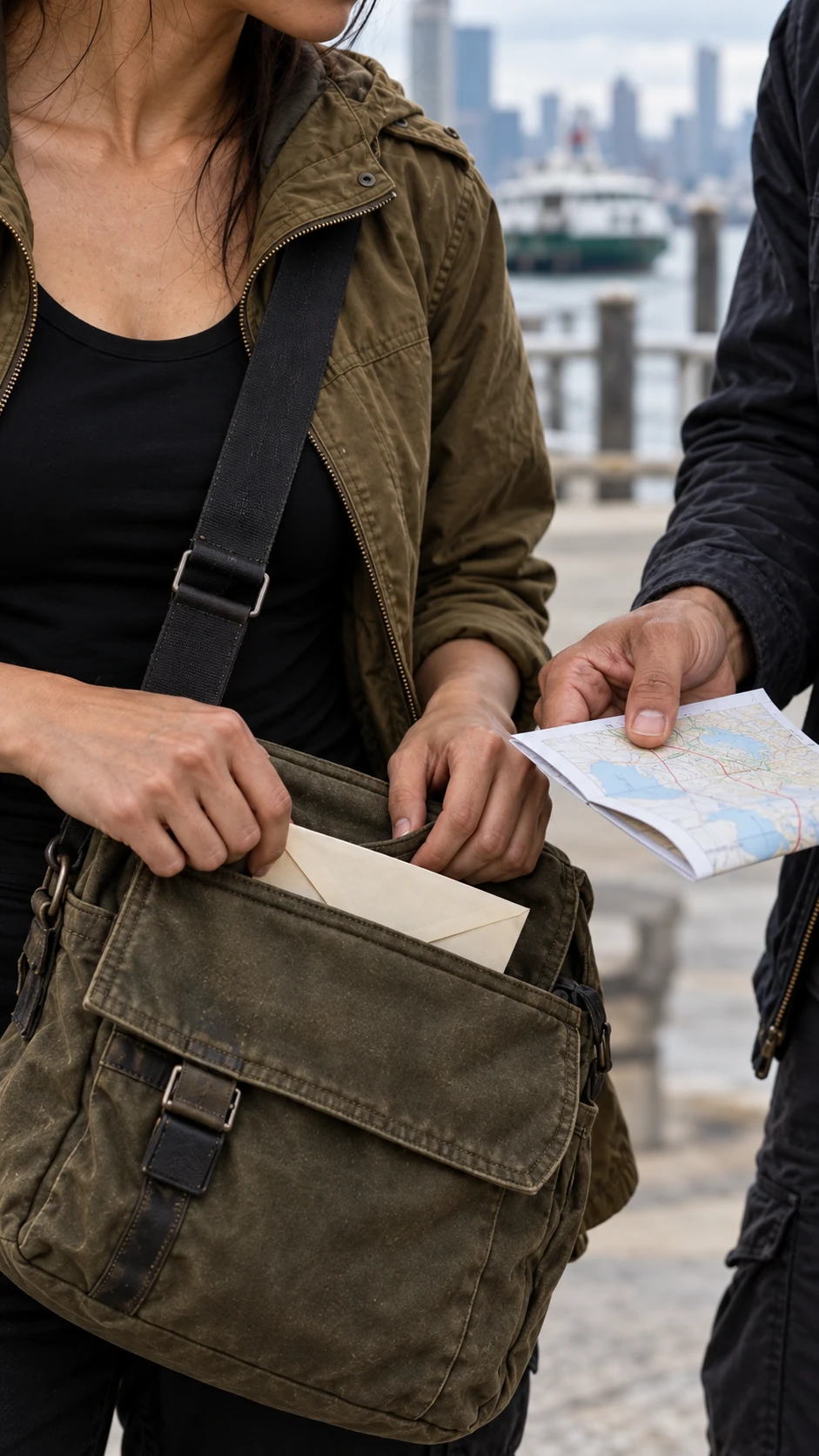
Last Ferry’s opening can begin with Maya checking the dispatch slip, then reveal Arjun at the edge of the same dock. A vertical wide shot establishes the gate; a medium two-shot shows the rival claim; close coverage clarifies the envelope without losing who holds it. Do not cut so tightly that the audience forgets the setting or the other person. A character continuity bible helps preserve face, costume and proportions across these changing distances; see the reference-image choices in the consistency guide.
Use 16:9 when the scene needs width
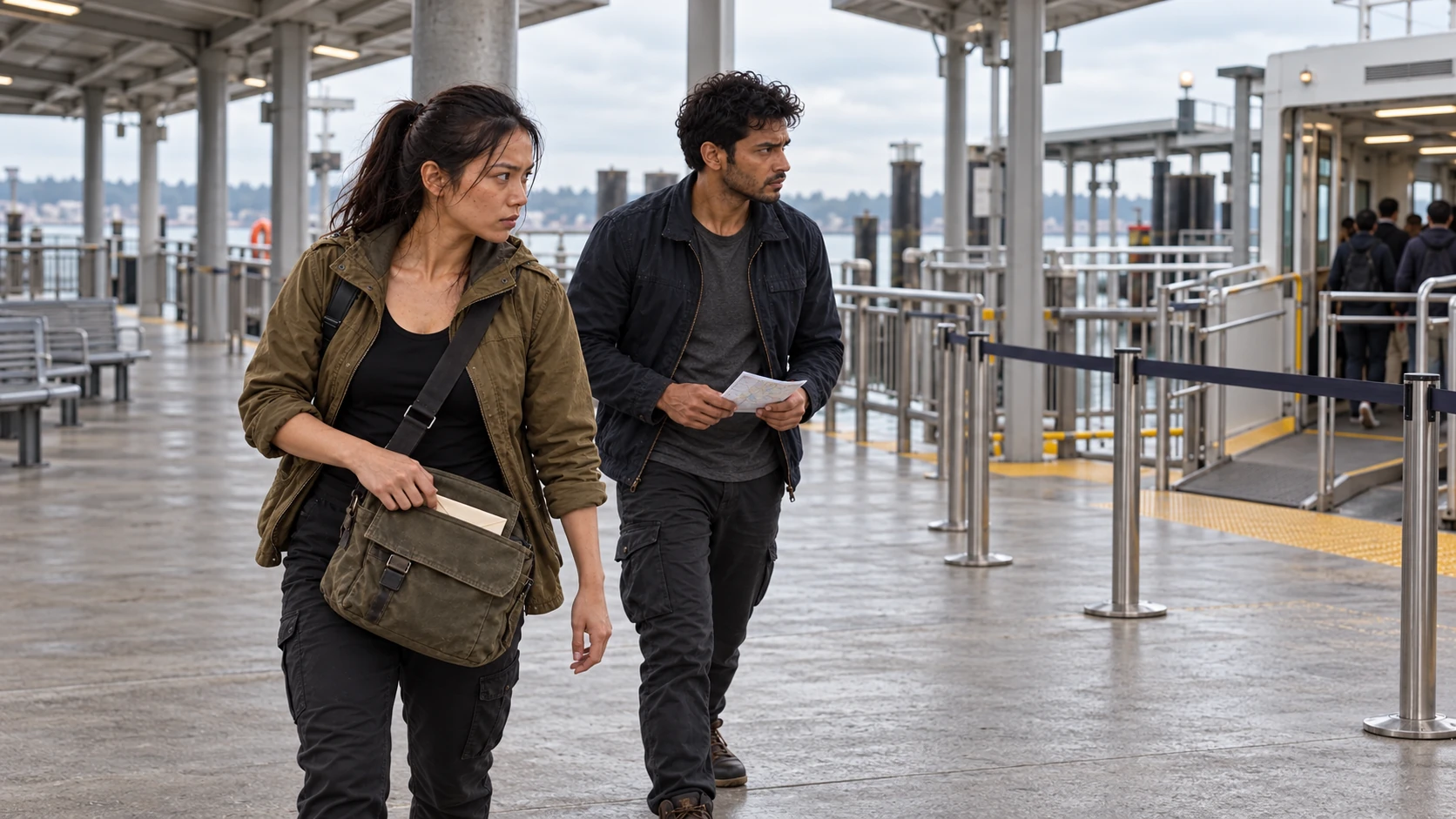
Landscape can serve a scene that depends on separation, multiple characters, a visible route or a location whose layout explains the stakes. A wide frame could hold both couriers, the envelope between them and the ferry gate in the distance. The viewer sees the spatial relationship without repeated inserts. It can also support a buyer’s intended use across a presentation screen, website hero or landscape placement when those channels are in scope.
Plan that composition directly. A 16:9 crop of a 9:16 frame, retaining its full width without extending the image, keeps about 31.6% of its height and area, less than a third. On a 1080 × 1920 frame, that is a strip roughly 1080 × 608 pixels high. Faces, hands or the destination sign may lie outside it; stretching the image distorts their proportions. Use a separate storyboard pass to set subject placement, camera movement, on-screen text and negative space for the wide frame. Record which dialogue or action stays shared and which shot changes by aspect ratio. The dock geography plan shows how to establish screen direction before making that format decision.
Plan the Last Ferry confrontation in both frames
Use the same story beat in each composition, but let camera placement reveal different information.
Keep the confrontation’s shared facts in both versions: Maya carries the sealed envelope, Arjun contests the route, the ferry gate is behind them, and the choice ends in cooperation. In 9:16, make separate close and two-person compositions so faces, hands and the envelope do not compete in one narrow frame. In 16:9, add the route and gate in a wider establishing view. Mark which dialogue and action are shared, which insert or reaction must be re-shot, and where captions can sit without covering the envelope. A crop is acceptable only if it preserves the clue and both characters’ eyelines.
- Establish the dock: in 9:16, include the departure sign above the two couriers; in 16:9, show the approach route and ferry gate in one view.
- Make the claim clear: frame Arjun’s dispatch slip and Maya’s sealed envelope while preserving their eyelines.
- Show the controlled clash: choreograph a brief non-graphic exchange with enough space to read position and reaction; a wide frame can show both bodies, while vertical coverage may use a wider lens or separate matched angles.
- Land the choice: show both stopping at the boarding signal and choosing to verify the delivery together.
Keep the same costume, bag, envelope and performance intent. The format changes composition, not character identity or story outcome. For the fight’s rehearsal and continuity boundaries, read the action-scene review guide.
Compose for the decision in each frame
9:16 carries the close decision; 16:9 can establish the route.
- 9:16 · character and clue
Face, eyeline and secured envelope
Keep the essential clue away from caption and interface areas.
- 16:9 · shared geography
Both couriers and the boarding direction
Use a separately composed wide shot when the route matters.
- Shared insert
Envelope beside route slip
A deliberately framed close insert can serve both edits.
- Final review
Check each delivered frame independently
Do not assume an automatic centre crop tells the same story.
Illustrative framing plan. Platform overlays and delivery specifications are checked for the actual release.
Protect captions and story details across versions
Create a delivery matrix for each episode and aspect ratio. Track master file, frame dimensions, language, caption file, on-screen text, title card, review owner and approval state. Check that lines fit at normal phone size and that subtitles do not obscure the envelope, hands or a facial reaction. The appropriate safe area depends on destination; use its current requirements rather than treating one generic box as universal.
Review the opening frame, any major crop or camera change, and the last beat. Check the same prop and costume anchors across versions, then play the full export to verify timing and legibility. If a translation expands the line, adjust the timing or shot design instead of shrinking type until it becomes difficult to read. The regional version matrix records those changes and owners.
Inspect the chosen export on the actual intended phone width as well as on a desktop preview. Confirm that the character’s expression, prop and caption can be read together, and that the final call to action does not cover the story’s resolution. Keep the approved master and each alternate version named separately so reviewer notes cannot be applied to the wrong composition.
Plan the two edits before generating shots
A coverage decision can prevent a weak crop later.
- Establish the terminal
Landscape wide + vertical entry shot
Separate coverage: the destination needs a different composition.
- Read the challenge
Portrait reaction + medium two-shot
Separate coverage if both faces and the prop cannot fit.
- Compare the evidence
Tight hand-and-paper insert
Potentially shared: confirm the clue survives both crops.
- Leave together
Follow shot toward the same gate
Check screen direction and subtitle space in both versions.
A planning example for one scene, not a universal shot quota.
Brief the format for the actual buyer journey
Specify the destination screens, the required aspect ratios and the story details that must stay visible. Mark scenes that need a wide view of the route and those that rely on a face or a hand-held clue.
Our AI microdrama production in Singapore service uses the storyboard and sample scene to settle those framing decisions. For platform context, read the Singapore TikTok marketing guide; check current placement requirements when preparing the final export.
Common questions
Is 9:16 always best for a microdrama?
No. Choose a vertical composition when phone viewing and close character action suit the story. Use landscape when route, distance, group relationships or the intended screen need more width.
Can a vertical master be cropped for 16:9?
A 16:9 crop from a 9:16 frame keeps about 31.6% of the original image when it retains the full width and adds no new picture area. That is less than a third. If essential action lies outside that strip, plan separate landscape coverage or a clearly scoped extension instead.
What should a format review include?
Check subject placement, screen direction, prop visibility, captions, on-screen text, opening and ending frames, and the complete export at the intended viewing size.
Bring us the story you want to tell.
Tell us your audience, target markets, languages and the kind of series or microfilm you have in mind. We’ll discuss the creative direction, pilot and production scope with you.