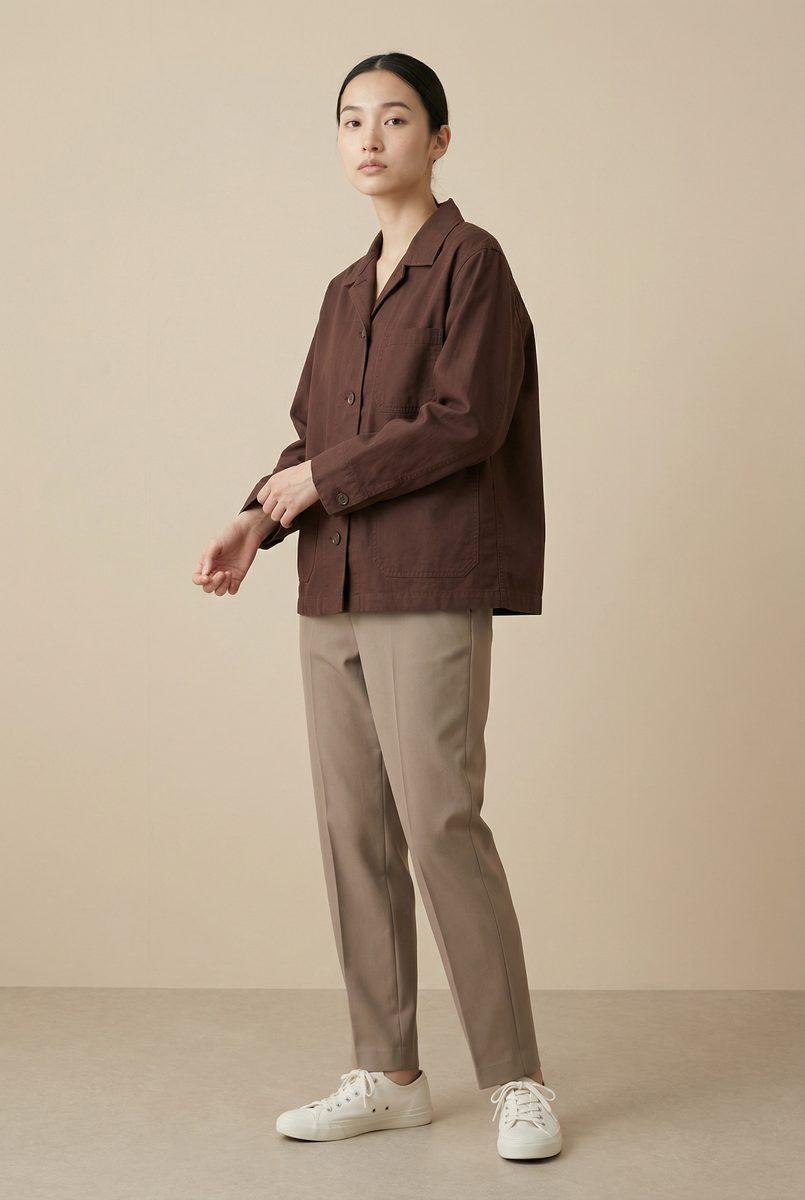
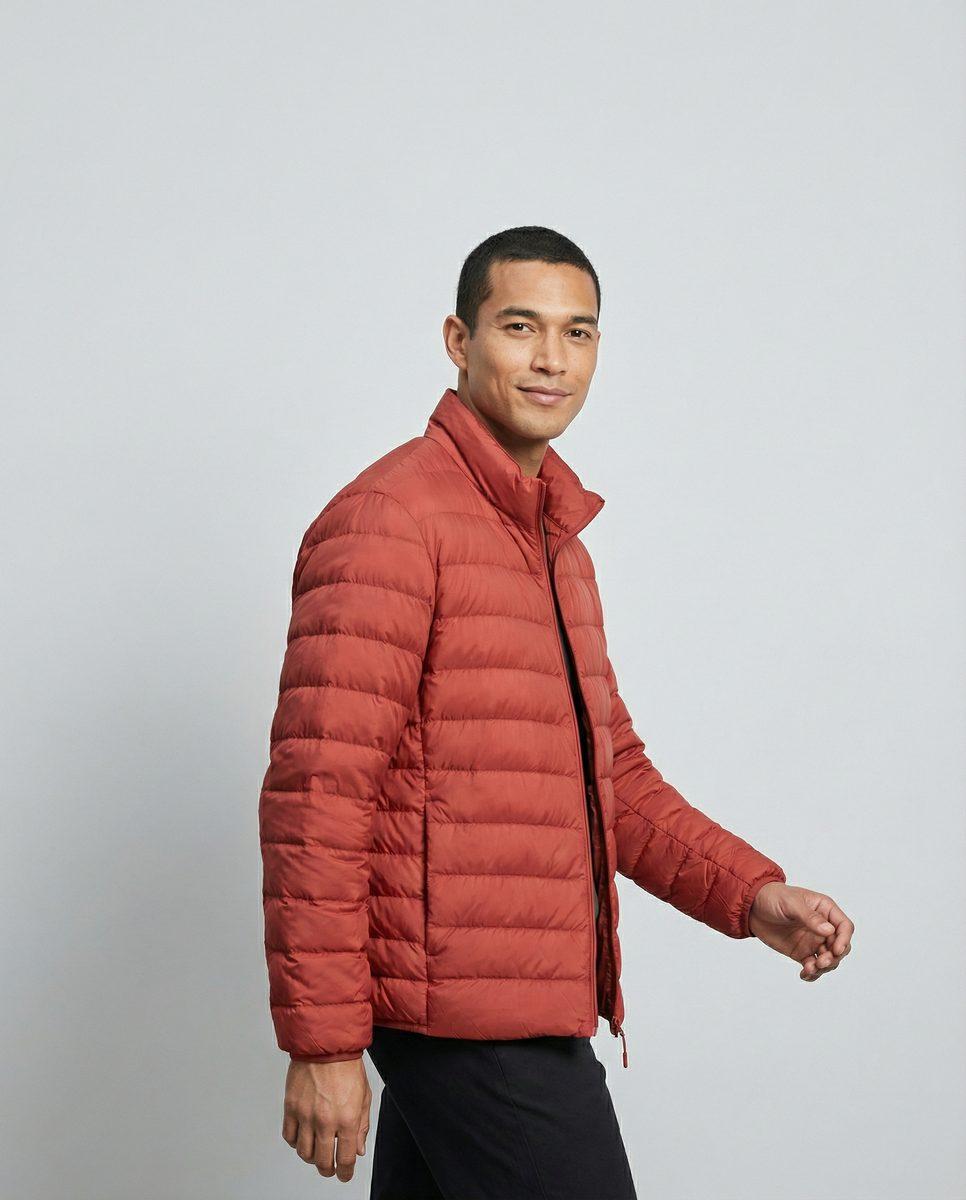
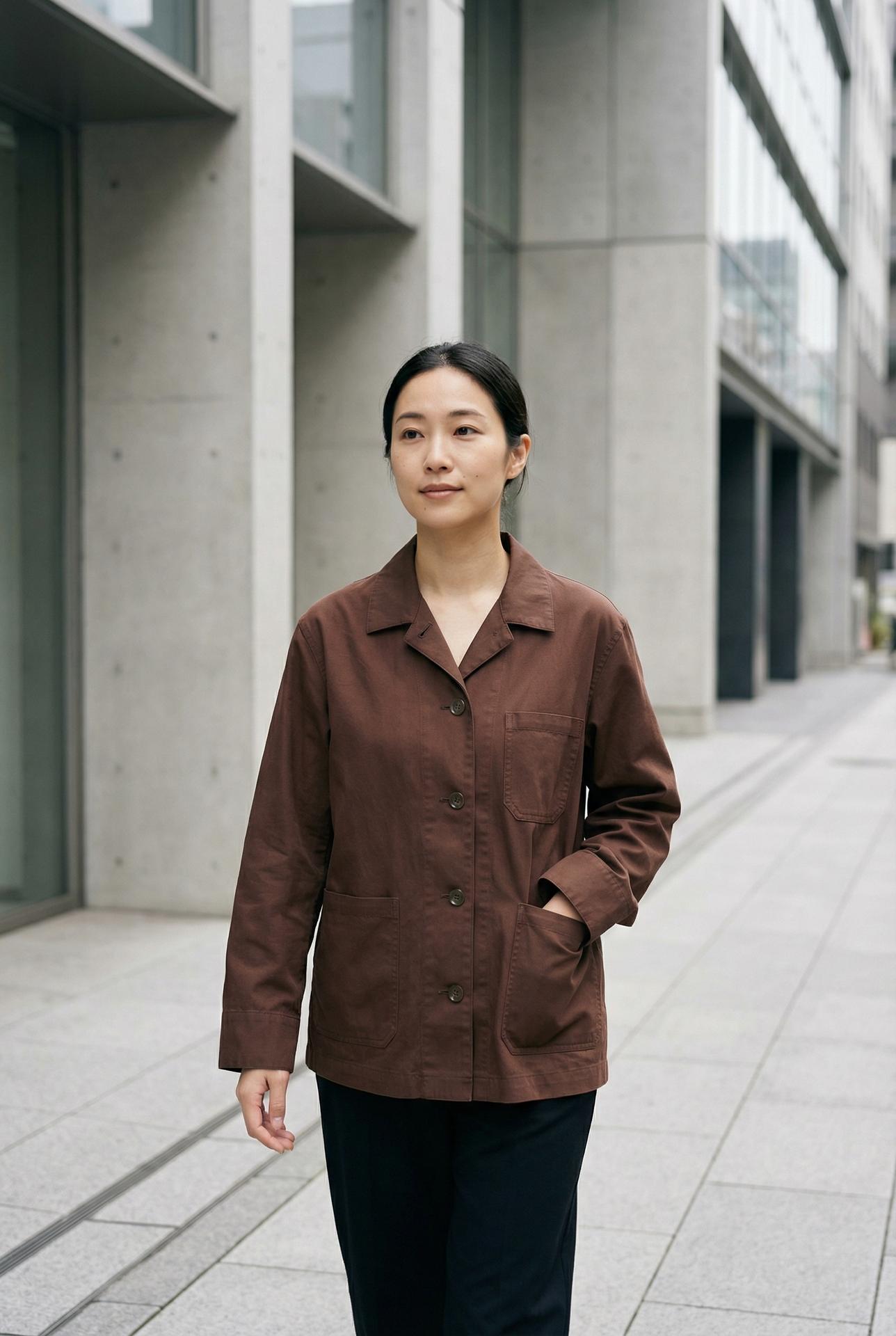
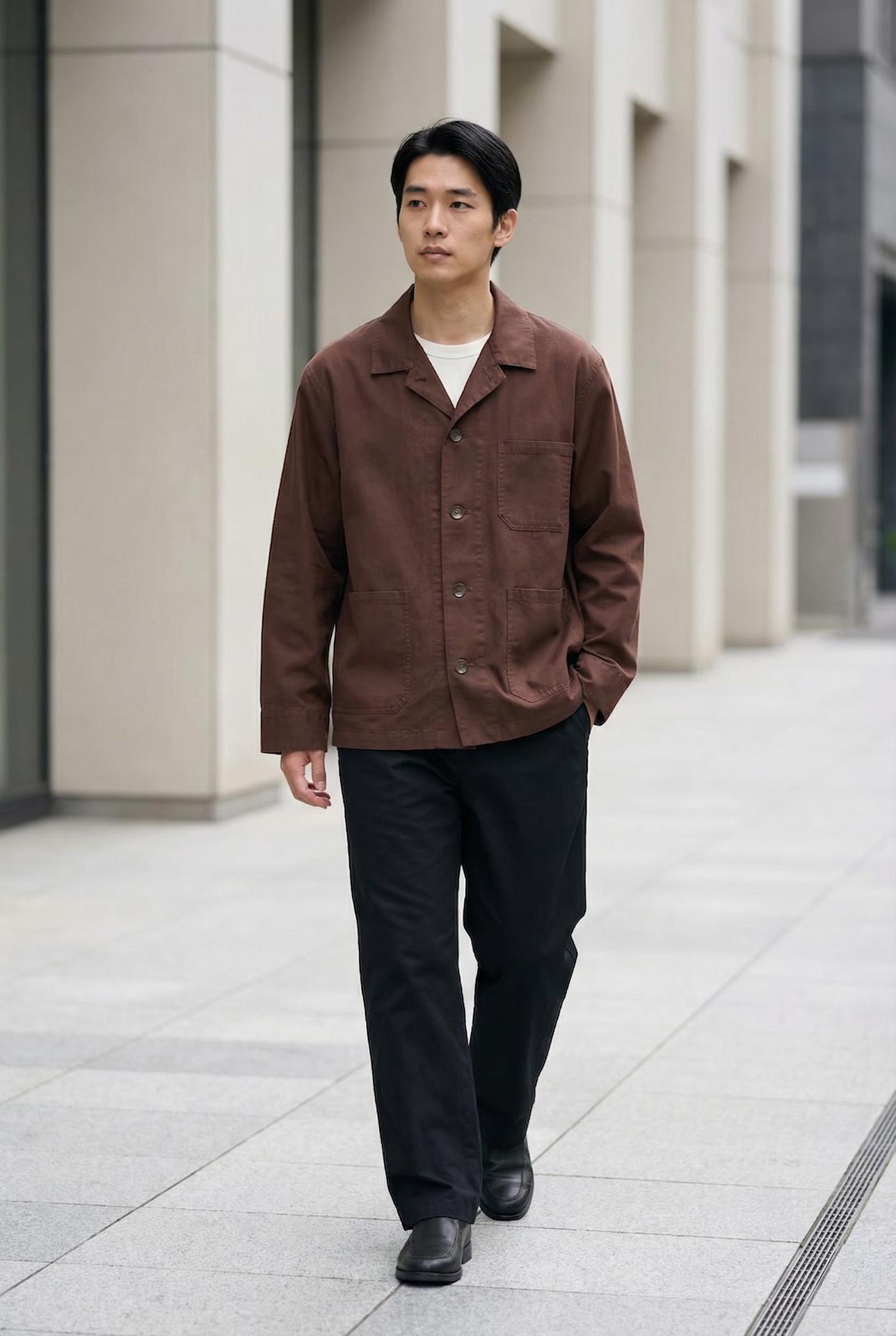
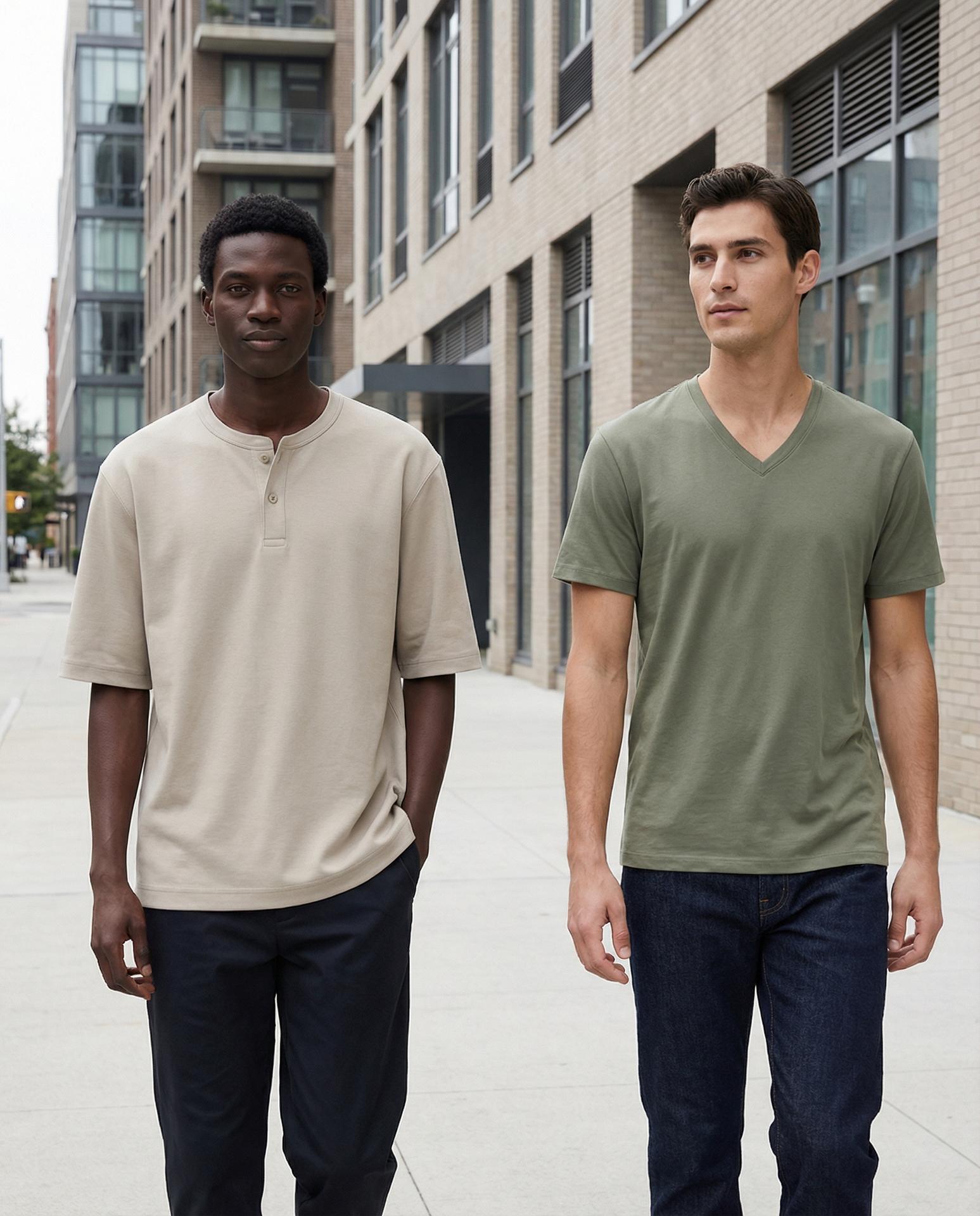
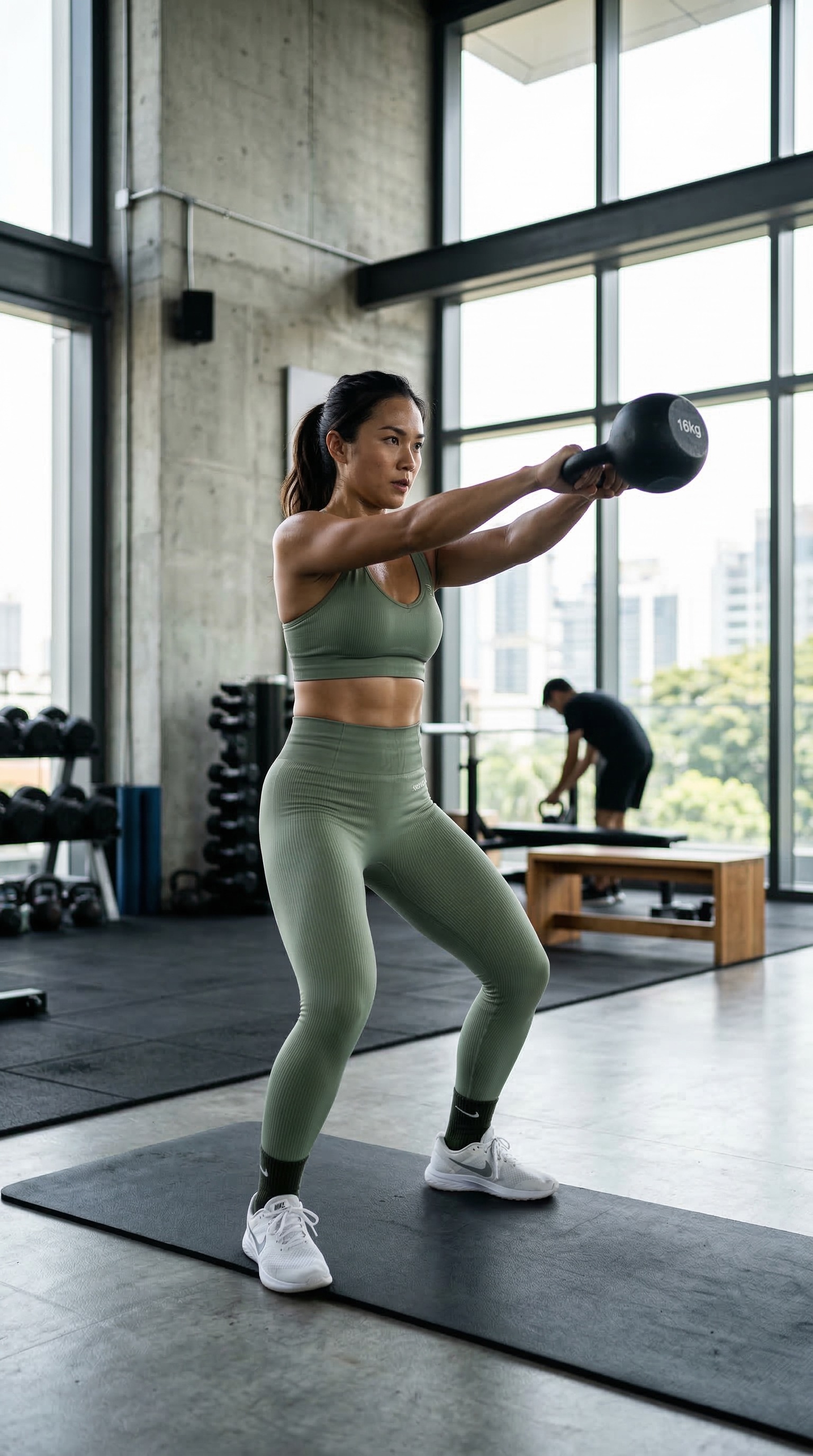
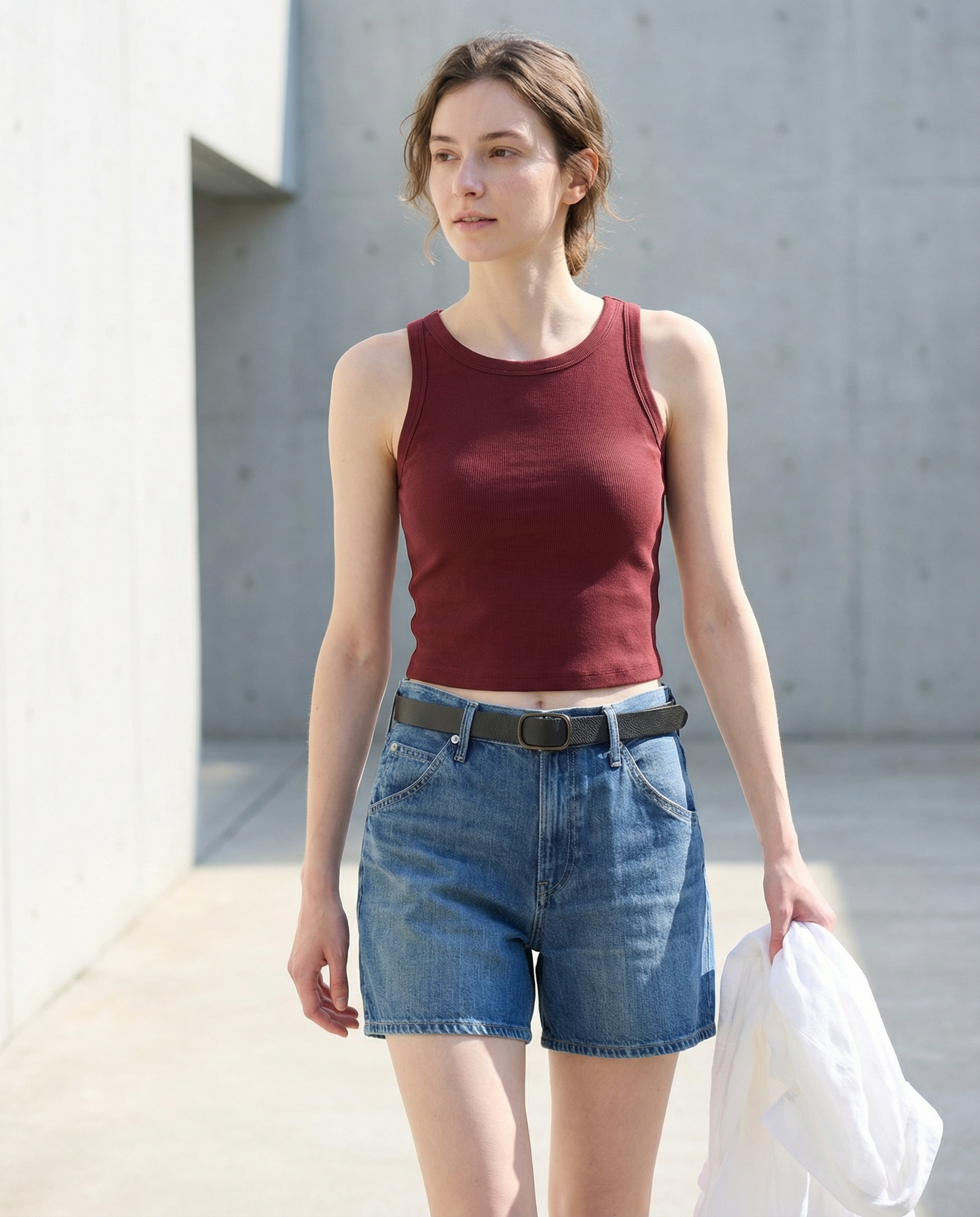
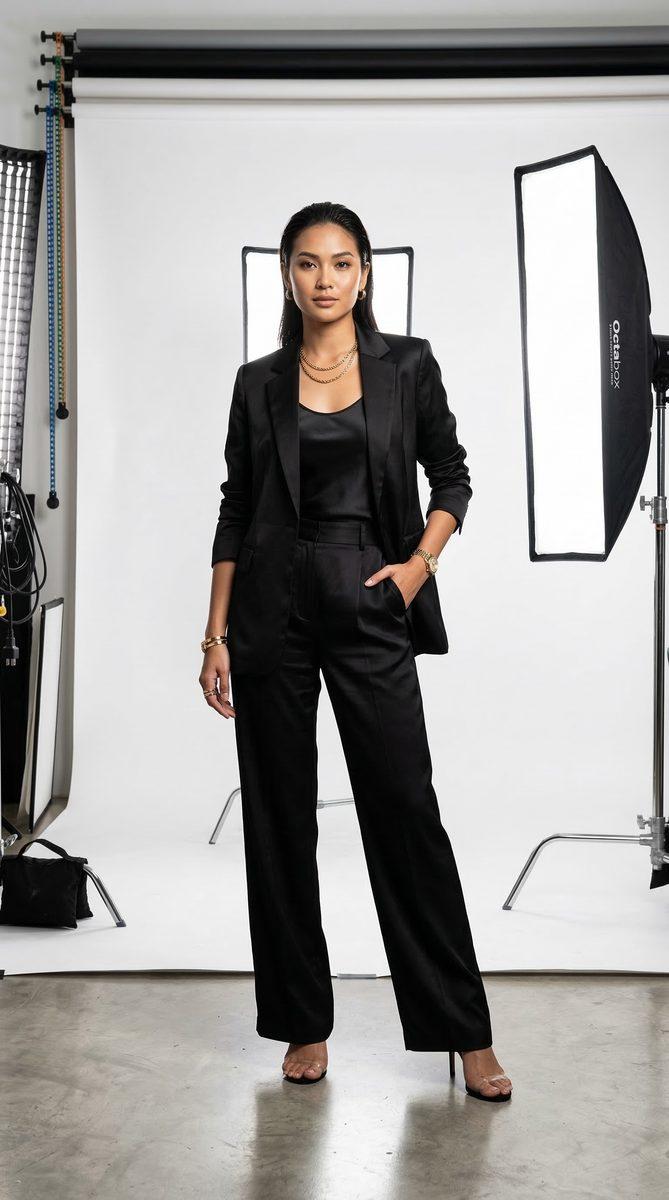
- One AI model identity, agreed once, reused every season for a consistent brand face across collections.
- Garments come from your own photos and stay the fixed element in every frame.
- We do not clone a real person's identity or likeness without their explicit permission.
- Distinct from virtual try-on: this is directed campaign imagery, not a shopper's own fit preview.
What is an AI model photoshoot?
An AI model photoshoot casts a generated model — a specific face, body type, ethnicity, age and presence — to wear your real garments across a collection. Unlike a general AI fashion photoshoot, where the model can vary look to look, this service is built around designing one identity your brand keeps and reuses: the same face and build appearing in this season's lookbook, next season's campaign, and the season after that, so your brand builds a recognisable "model" the way a real agency signing would.
The garment is still the fixed element. The model is generated; the clothing comes from the reference photos you send, so the fit, drape and print are never invented. A locked identity also simplifies briefing over time: once a brand model is approved, new drops only need new garment photos and a scene brief, not a fresh casting conversation about who the model should be.
How is it different from virtual try-on?
The two are often confused because both put a garment on a generated or altered image of a person, but they solve different problems for different audiences.
An AI model photoshoot is brand-facing: it produces directed campaign and catalogue imagery — lookbooks, PDP sets, editorial — using a cast model your brand controls, for marketing every shopper will see. A virtual try-on tool is shopper-facing: it typically places a garment onto a shopper's own photo, or a generic avatar, in real time, so one individual can judge fit before buying. There's no casting, no creative direction and no brand identity involved — it's a private, single-session render rather than a piece of campaign content. The two also differ on ownership: an AI model belongs to your brand's campaign and can appear in ads and on your own site, while a shopper's try-on render belongs to that shopper's session and isn't campaign content at all. In practice, brands often use both — an AI model photoshoot for the campaign everyone sees, and a virtual try-on tool on the product page so individual shoppers can check fit for themselves. If you need customer-facing fit visualisation, that is a different build from the photoshoot service on this page; see our note on AI fashion try-on tools for how the category works.
How do we cast an AI model?
Casting starts with the same brief you'd give a modelling agency: ethnicity, age range, body type, and the general presence or energy the brand wants. From there we design a model identity and lock it — the same face, proportions and skin tone carried through every look, every lighting set-up and every season you order.
Localisation is part of casting, not an afterthought. A brand selling into the US, UK and Southeast Asia from one collection can request a model look calibrated to each audience, or one identity used consistently everywhere if that suits the brand better — both are casting decisions made in the brief, not separate shoots. We typically propose two or three reference frames at the sample stage — a close crop and one or two full-body poses — so the brand can confirm ethnicity, age impression, build and expression before a single look from the real collection is generated against that identity.
How do the garments stay real?
The model is generated; the garment is not. Every piece comes from your own flat, ghost-mannequin or on-model reference photos, and colour, print placement, logo geometry and fabric behaviour are treated as fixed elements the model wears rather than details the system invents. A creative director checks each frame for hands, drape, seams, logos and skin, and anything that drifts is regenerated from the same inputs rather than patched. This matters more for an AI model photoshoot than for a general lifestyle image, because the model appears repeatedly across a whole collection — a fault that survives QA on one look tends to show up again on the next, since the same identity and lighting set-up are reused.
Are AI models legal and ethical to use in fashion marketing?
Regulation is catching up with the practice rather than leading it, and the direction is toward more disclosure, not less. In the EU, Article 50 of the AI Act becomes applicable on 2 August 2026 and requires AI-generated content that could be mistaken for a real person to be labelled, regardless of intent to deceive. In the US, Amazon has required sellers since July 2026 to tag photorealistic AI-generated people in listing images with an IPTC metadata keyword identifying them as a synthetic performer — a direct response to state-level disclosure law. Our AI fashion photoshoot page covers the wider US and UK disclosure rules for advertising imagery in more detail.
On ethics, the honest answer is that consent and disclosure, not the technology itself, are what the industry is being judged on. Zalando has said around 70% of its Q4 2024 editorial imagery was AI-generated from digital twins of real, consenting models, cutting turnaround from six-to-eight weeks to three-to-four days. H&M announced digital twins of 30 real models in March 2025 and published the first images in July 2025, watermarked as synthetic, with the real models retaining consent and rights and paid per use — a model built around permission. By contrast, an AI-generated model ad Guess ran in Vogue in August 2025 drew a transparency backlash when its AI disclosure was judged too small to notice. We do not clone a real person's identity or likeness for a brand model without that person's explicit permission, and consumer research backs the caution: a widely cited 2026 industry survey found the large majority of consumers expect AI use in product imagery to be disclosed. Separate eye-tracking research has found that viewers of AI-generated fashion ads spend more time looking at the product and body than the face, compared with real-model ads — a difference worth knowing if a campaign's job is to sell a face rather than a garment.
How much does it cost?
An AI model photoshoot is priced on the same per-look basis as any AI fashion photoshoot, across catalogue lookbook, styled fashion and campaign-grade tiers. What moves the AI-model portion of that price specifically is casting complexity — how many distinct model identities or ethnicities you need across one drop, how many pose variations per identity, and how many revision rounds are agreed for the model look before the full run starts. See the full AI photoshoot pricing page for how tiers work across product and lifestyle categories too. For a number against your own collection, send us the brief: a single-identity catalogue lookbook sits toward the bottom of its tier, while a campaign with several model identities across multiple markets moves toward the top of the campaign-grade tier.
What do you need to send us?
Two things, beyond the usual garment photos: a casting brief (ethnicity, age range, body type, and any existing brand-model identity you want matched or evolved) and the markets or audiences the model needs to work for. Flat, ghost-mannequin or on-model reference photos of each garment — front and back, even light, no heavy filters — complete the brief, along with a brand book or mood board if you have one. From there we propose a model identity and a short sample set before generating the full collection. If you already have an approved model identity from a previous season, tell us — reusing it skips the casting and sample-approval stage entirely, and the brief moves straight to the new collection's reference photos.
| Real model shoot | AI model photoshoot | Virtual try-on tool | |
|---|---|---|---|
| What the customer sees | A hired, real model wearing the garment | A generated model identity wearing your real garment | The garment placed on the shopper's own photo or a generic avatar |
| Purpose | Brand marketing and catalogue imagery | Brand marketing and catalogue imagery | Pre-purchase styling preview; fit and sizing need separate evidence |
| Turnaround | Weeks, once studio, agency and crew are booked | Timing scoped to the approved look count, references and review rounds | Interactive preview; timing depends on the tool and input |
| Consistency across a season | Depends on model availability for every booking | One identity and lighting set-up locked for the whole season | Not applicable — each shopper sees their own render |
| Rights and consent | Model release negotiated per shoot | Generated identity; we do not clone real people without permission | Shopper's own image, subject to the tool's consent and retention terms |
Frequently asked questions
Do you clone real people to create AI models?
No. We design a synthetic identity from your casting brief — ethnicity, age, body type and look — rather than copying a named, real person. If a brand wants to license a real person's likeness as its model, that requires that person's explicit written consent, which sits outside the default service.
Is an AI model legal to use in fashion advertising in the US and UK?
There's no blanket ban, but disclosure obligations are tightening in both markets and vary by state and platform. We flag where labelling is likely to apply to your campaign as part of the brief, though final compliance sign-off sits with your brand's own legal and marketing team.
Can the same AI model appear across multiple seasons?
Yes — that's the point of the service. Once a model identity is agreed, it's locked and can be reused season after season with new garments, so your brand builds a consistent "face" across every collection rather than a new cast for every drop.
How is an AI model different from a virtual try-on avatar?
An AI model is brand-facing campaign content, cast and directed like a real model booking. A virtual try-on avatar is shopper-facing: a single shopper's own photo or a generic body, used privately to check fit before buying, with no casting or creative direction involved.
Can you create AI models of different body types for size-inclusive campaigns?
Yes. We can cast one identity per body type or age range you want represented, generated from the same garment photos, so a size-inclusive campaign doesn't require a separate shoot day or agency booking for each body type shown.
Do you disclose that a model is AI-generated?
We flag where disclosure rules or platform labelling are likely to apply, based on your markets and channels, as part of the brief. Final labelling and compliance decisions sit with your brand, since requirements vary by state, country and platform and are changing through 2026.
What happens if we want to change the AI model's look mid-season?
Revision rounds for the model identity are agreed upfront, and most look changes happen during the sample-set stage before the full collection is generated. A significant recast mid-season is treated as a new casting brief, since it affects every look already locked to the old identity.
Can we use our own brand ambassador's face as the AI model?
Only with that person's explicit consent to use their likeness this way — we do not clone a real person's identity without permission. Where consent is in place, we can work from reference photos to build a consistent identity for the collection.