- An AI lookbook tells your collection's story without a traditional shoot. AI generates the narrative, styling, and lifestyle context.
- Production runs through five stages. You input the collection, define the aesthetic, generate editorial content, refine and curate, then create market-specific versions.
- A typical lookbook spans full-page layouts, detail shots, lifestyle contexts, and fit and colourway variations across multiple markets.
- Realistic AI models built from references tend to convert best. Fully virtual models offer more freedom but can feel synthetic.
- You can produce multi-market versions at the same time. This compresses weeks of planning into days.
What Is an AI Lookbook and Why It Matters Now
A lookbook is fashion's most powerful storytelling tool. It's not product photography — it's editorial narrative. It shows how your collection comes together. It shows how pieces style with each other, how they fit into different lifestyles, and why someone should want them.
Traditionally, creating a lookbook meant:
- Hiring an editorial photographer ($5,000–$15,000).
- Booking models and stylists ($3,000–$8,000).
- Scouting locations and managing logistics ($2,000–$5,000).
- Waiting 4–8 weeks from conception to final product.
- Committing $10,000–$30,000 per lookbook.
An AI lookbook works differently. It compresses weeks of planning into days. It offers unlimited creative variations. You can even create multi-market versions at the same time, all for a fraction of the cost. Learn more about how AI photography compares to traditional costs.
For fashion brands in Singapore, the USA, UK, or Australia, this changes the entire competitive landscape.
How AI Lookbook Generation Works
Step 1: Input Your Collection
You provide high-res photos of your pieces. You also share detailed descriptions of each garment, plus available colors and sizes. Then you list the key style points you want to highlight.
Step 2: Define Your Aesthetic
You specify your lookbook's visual direction. This covers mood (editorial, lifestyle, luxury, casual, etc.), color grading, lighting preference, model types, and lifestyle contexts.
Step 3: AI Generates Editorial Content
The AI generates complete lookbook pages. Full outfits with your pieces get styled together and shown on models in lifestyle contexts. Lighting and mood stay consistent across all images.
Step 4: Refinement and Curation
You review generated options, pick the strongest variations, and refine based on feedback. Iterations that would take weeks with traditional shoots happen in hours.
Step 5: Market-Specific Versions
You can generate lookbook variations for different markets. Use different models for different regions, adjust styling to reflect local preferences, and change contexts to reflect local lifestyles.
Timeline: 1–2 weeks from conception to finished lookbook across 3+ markets. Traditional approach: 8–12 weeks for a single market.

The Lookbook Product: What You'll Get
A modern AI lookbook typically includes:
- 10–20 full-page editorial layouts showing outfit combinations and styling.
- Close-up detail shots highlighting fabrics, construction, and finishes.
- Lifestyle contexts showing pieces in real-world scenarios.
- Size and fit variations on different body types.
- Colorway variations of key pieces.
- Multi-market versions with different models and contexts for each geography.
The result is a cohesive visual narrative. It tells your brand's story and sells your collection, without a single day on set.
Choosing Your Models for AI Lookbooks
Virtual Models vs. Realistic Models
Virtual models: Completely AI-generated from scratch. Pros: total creative control, unlimited diversity, and the freedom to create any look. Cons: they can feel synthetic, and some audiences distrust obviously AI-generated content.
Realistic models: AI-generated from reference photos or real photos, then styled into your collection. Pros: they look authentic, customers recognize real people, and they earn the highest conversion rates. Cons: less experimental freedom.
For most fashion brands, realistic models win. They convert better, and they feel more authentic. Our AI fashion photography service uses this approach for maximum impact.
Model Selection Strategy
Think about who your customer is. If you sell to a global audience:
- For UK market: Include White, South Asian, and Black British models.
- For USA market: Include diverse ethnic representations and a range of body sizes.
- For Singapore/Asia: Include East Asian, Southeast Asian, and South Asian representations.
- For Australia: Include Indigenous Australian, Asian, and European representations.
AI's superpower here is simple: you can show your collection on dozens of different model types. This isn't tokenism — it's genuine representation. You can style the same dress on five different models, all in the same lookbook.
Height, Build, and Styling Consistency
AI gives you one clear advantage. You can specify exact model requirements and get consistency every time. Want all models 5'8"–5'10"? Done. Want them all with a specific hair length and style? Done. Want each model wearing a different trend-relevant accessory? Done.
Traditional lookbooks are limited by which models you can actually book. AI removes that limit.
Locations and Lifestyle Contexts
The Location Advantage
Traditional lookbooks are limited to locations you can physically access. Want to shoot in a Santorini villa? You need a location scout, permits, flights, and a crew. That's $10,000–$20,000 in logistics alone.
AI lookbooks work differently. Specify "luxury resort in Greece" and generate it instantly. Want Paris? Done. Want a Tokyo bookstore? Done. Want a beach in Bali? Done. You get it all without leaving your office.
Best Contexts for Fashion Lookbooks
- Luxury positioning: Upscale apartments, resort settings, high-end retail environments.
- Lifestyle/casual: Coffee shops, parks, urban streets, home settings.
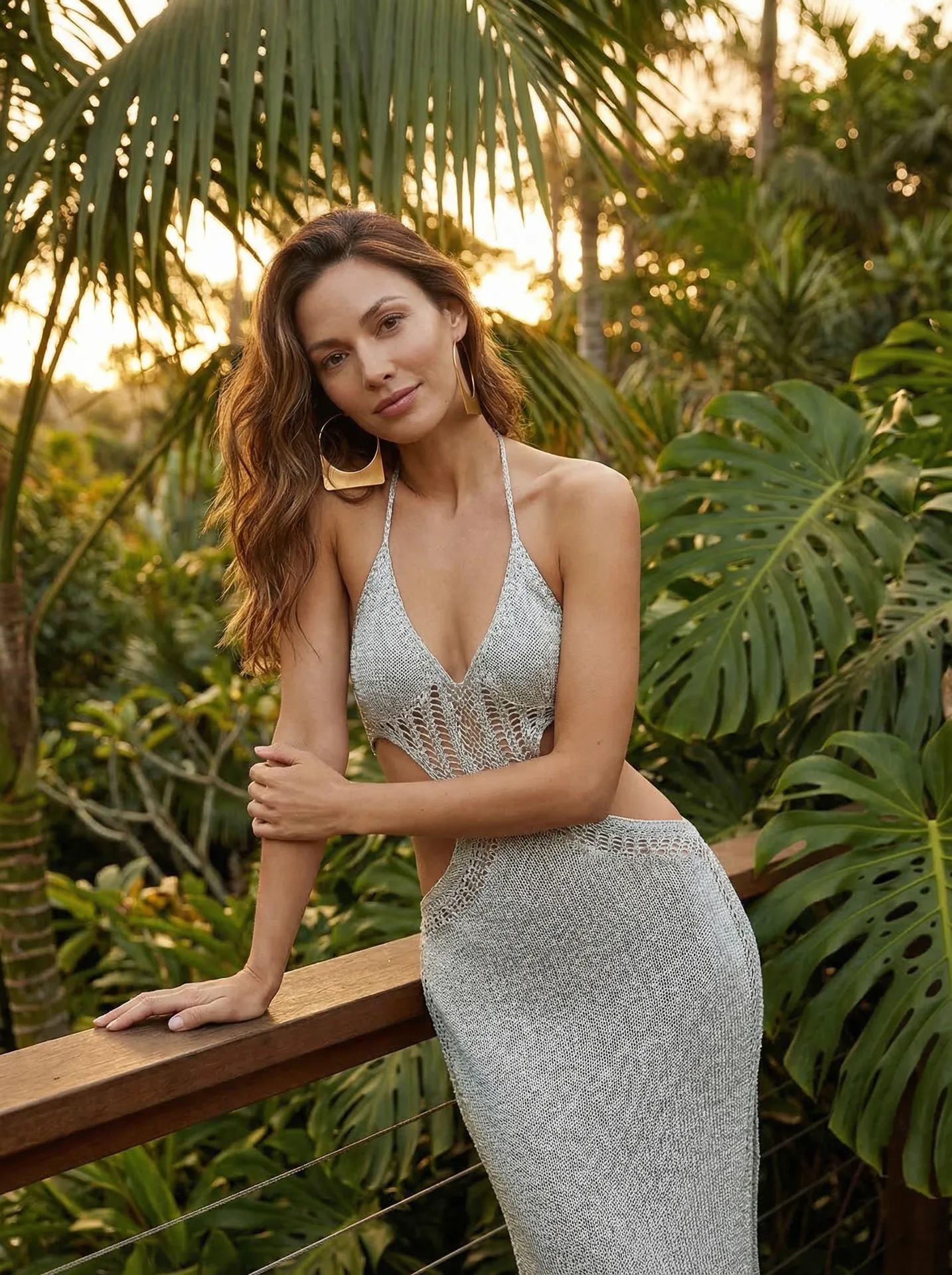
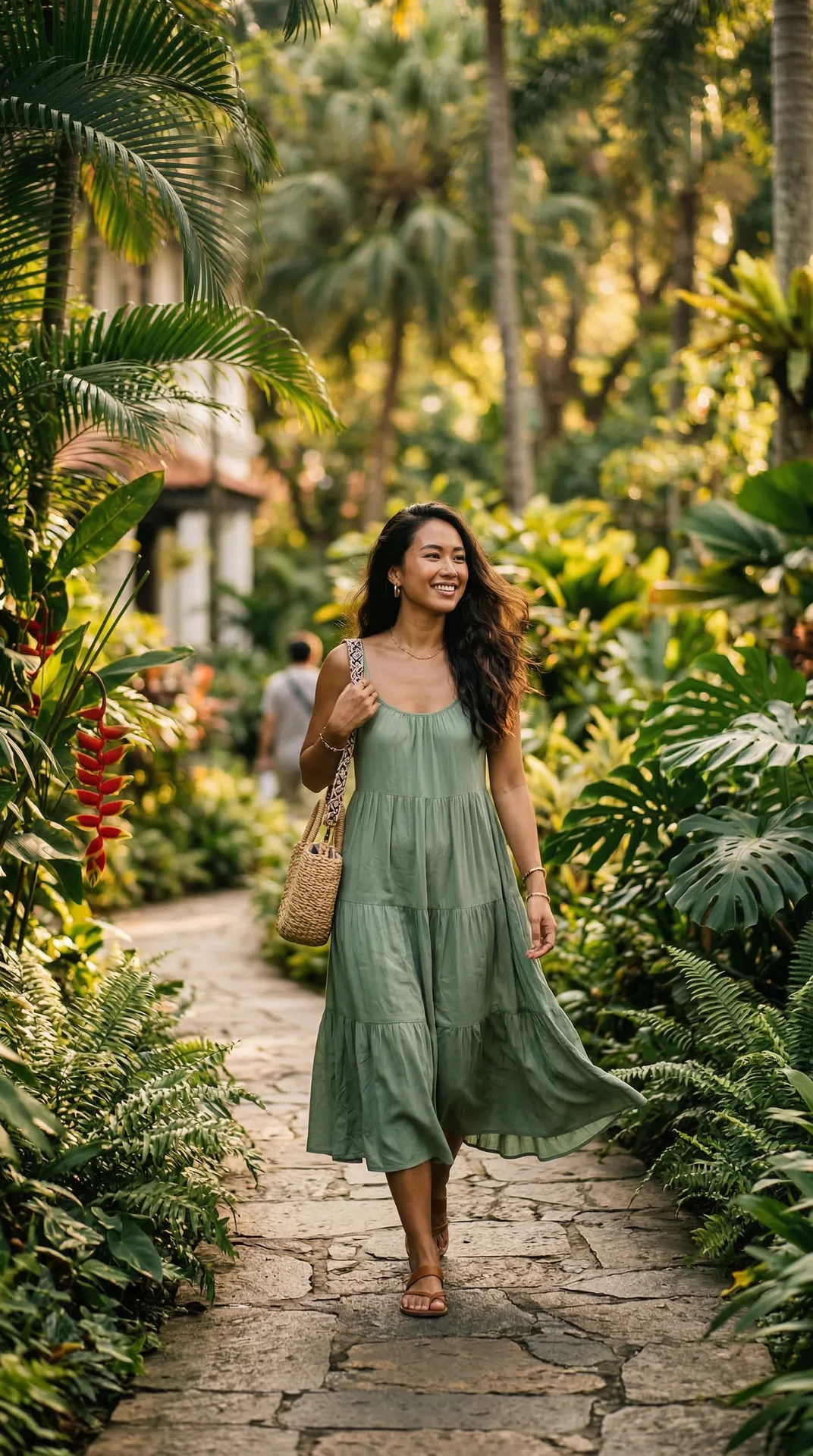
- Resort wear: Beach clubs, rooftop bars, tropical gardens, villa terraces.
- Workwear: Modern offices, architectural spaces, urban professional settings.
- Evening wear: Galleries, rooftop venues, nightlife settings, private events.
Choose contexts that match your brand's positioning and your customer's aspirations.
Styling and Outfit Combinations
Designing the Outfit Stories
The best lookbooks tell outfit stories. They don't just say "here's a dress." They show "here's how you style this dress for brunch," "here's how you elevate it for evening," and "here's how you layer it for colder months."
Plan these stories before generation:
- Day-to-night: Show one piece with different styling for daytime and evening.
- Seasonal shifts: Show how to style for summer vs. fall.
- Occasion mixing: Show how to dress pieces up or down.
- Accessory focus: Showcase how different accessories change the look.
Technical Details: The AI Advantage
AI excels at styling consistency. Want a certain watch in certain shots? Want a specific shoe to complement certain pieces? Want a brand bag to stay visible? Just specify it. The AI keeps those choices consistent across the entire lookbook.
Coordinating these details in traditional shoots is a nightmare. With AI, it's straightforward.
Want to see AI lookbooks for your collection?
Book a free consultation — we'll walk through how to create your first lookbook with AI.
Book a Free ConsultationMulti-Market Lookbooks: The Game-Changer
Why Market-Specific Lookbooks Matter
Fashion is deeply local. What's aspirational in Singapore might not resonate in London. Model representations, styling choices, color palettes, and contexts should match each market's preferences.
Traditionally, creating market-specific lookbooks meant shooting multiple times, or adapting one shoot extensively. Both options are expensive and time-consuming.
AI Multi-Market Strategy
Your core lookbook: Generate 15 editorial layouts that define your brand's aesthetic. This is universal.
Market variations: For each market, regenerate 5–10 key layouts with local models, local contexts, and local styling preferences. Same pieces, different narratives.
Timeline: 2 weeks to produce lookbooks for 3 markets simultaneously. Traditional: 6–9 weeks for sequential shoots.
Cost: A fraction of traditional costs for three market-specific lookbooks. Traditional: $30,000–$50,000.
Step-by-Step: Creating Your First AI Lookbook
Planning Phase (1 week)
- Define your story. What's the narrative of this collection? What's the mood? Who's the customer?
- List outfit combinations. What pieces pair together? What's the range from basic to elevated looks?
- Choose locations. What environments fit your brand? What context tells your story?
- Plan model casting. What ethnicities, body types, and ages match your customer base?
- Specify styling details. Hair, makeup, accessories — what completes the look?
Execution Phase (3–5 days)
- Provide high-res product photos and detailed descriptions to your AI partner.
- Share your mood board and style guide.
- Review first-pass lookbook layouts.
- Request refinements and iterations.
- Finalize hero layouts and detail shots.
Polish Phase (2–3 days)
- Review final lookbook for quality, consistency, and brand alignment.
- Export in required formats (PDF, web, print-ready).
- Generate market-specific variations if needed.
- Prepare for distribution (lookbook PDF, web gallery, social content).
Quality Standards: What to Look For
Fabric appearance: Does fabric look realistic? Does silk drape like silk, and does linen look linen-like? Does knitwear show the right texture?
Fit and proportion: Do pieces fit naturally on models? Do proportions look authentic, and are seams and edges clean?
Styling consistency: Does the collection's aesthetic stay consistent across all layouts? Do outfit combinations feel cohesive?
Lighting and mood: Does lighting enhance the pieces? Does the mood match your brand positioning?
Emotional resonance: Do the images make you want to buy? Do they tell a compelling brand story?
class="was-h4"The Quality Gap Is Closing Fast
In 2024, AI-generated lookbooks had visible seams. In 2025, they were competitive with professional shoots. In 2026, they're winning awards. The technology is moving fast, and quality is no longer a barrier to adoption.
Tips for Best Results with AI Lookbooks
Tip 1: Be specific in your briefs. "Modern aesthetic" is vague. Try this instead: "Minimalist aesthetic with warm neutrals, shot on light oak wood sets, models wearing minimal makeup with natural hair." That gives the AI something to work with.
Tip 2: Provide excellent product photography. AI works best with clear, well-lit product photos. Invest in good product shots as your input source.
Tip 3: Test variations early. Generate 20 variations of one layout first, then check what works before you scale to the full lookbook.
Tip 4: Embrace unlimited iterations. You can afford to explore options you couldn't with traditional shoots. Try different styling, different models, and different contexts.
Tip 5: Use AI as a starting point, not the end. The best lookbooks combine AI generation with strategic human curation. Use AI for volume, but let your creative director decide what makes the final cut.
Lookbooks as a Continuous Practice
Here's where AI really changes the game. You can now afford to create a lookbook every season, every month, even for new collections as they launch.
Instead of one annual lookbook that has to be perfect, you can create 12 seasonal lookbooks. Each one tells a different story. You can test different aesthetic directions, model representations, and styling approaches.
That's a competitive advantage that traditional fashion brands can't match.
Conclusion: The Future of Fashion Lookbooks
AI lookbooks aren't replacing the art of fashion photography. They're opening it up to more brands. Brands that previously couldn't afford a $25,000 professional lookbook can now create beautiful editorial content in-house. Browse real lookbook and campaign examples in our dedicated fashion portfolio.
For fashion brands in Singapore, USA, UK, Australia, and everywhere else, this is a chance to tell your story at scale. You can do it across multiple markets, with unlimited creative iterations.
The question isn't whether AI lookbooks are good enough — they're already competitive with professional work. The real question is: how quickly can you fold them into your launch strategy and start gaining ground on competitors?
Ready to Create Your First AI Lookbook?
We've created lookbooks for fashion brands from Singapore to New York. Let's talk about how to bring your collection to life.
Book a Free Consultation