In this guide
- Set the season question and choose the format before scripting.
- Plan each episode around a change in knowledge, relationship or choice.
- Track character, prop, eyeline and scene states so later cuts remain coherent.
Choose a connected microdrama or a complete microfilm
A microdrama is built for continuation: each instalment changes a relationship, a plan or the meaning of an earlier clue. A microfilm resolves its central story in one piece. Decide which promise you are making before writing the opening, because a serial must leave a live question while still giving each episode a satisfying turn.
Singapore production context is developing: Mediacorp announced a Singapore/Korean microdrama co-production on 15 September 2026. The announcement is an example of regional collaboration around the format.
The Last Table can be a serial because the restaurant’s final booking opens a family question that can change meaning as Lina and Wei uncover more. If the story only reveals who made the booking, it may work better as a self-contained mystery. For a cinematic one-off, see how a microfilm lands its ending.
On 1 October 2026, IMDA and TikTok announced a Singapore microdrama programme covering live-action and AI-enabled animation. Read the dated reports from The Straits Times and CNA for programme context.
For the wider filmmaking process, see our Singapore AI movie production guide.
Build the first episode around a choice with a cost
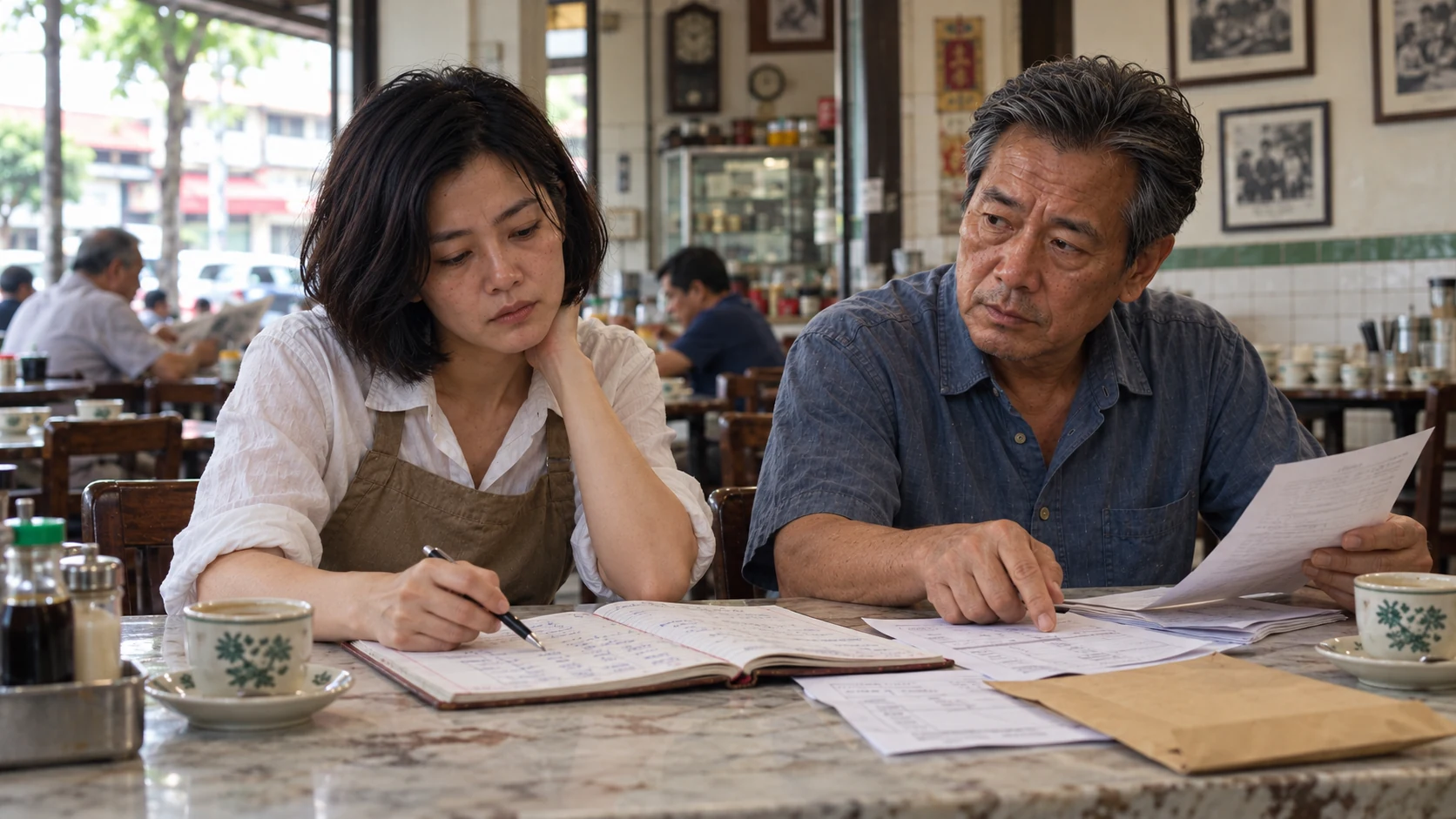
Write a one-sentence premise with a person, a specific want, an obstacle and a cost. In a Singapore-set story, recognisable details should do story work: a restaurant is closing, the last dinner booking is approaching, and the sale form is waiting beside the reservation book. Avoid adding local slang or landmarks as decoration when they do not affect the decision.
For Lina, the immediate want is a signature before closing. For Wei, it is time to honour a reservation he believes matters. Their conflict becomes an episode engine when a new fact forces one of them to reconsider. A strong premise can be described without explaining the whole backstory; each later episode earns another piece.
Use the same want-obstacle-cost test when planning a confrontation. The Last Ferry fight story gives two rivals incompatible claims before the choreography begins.
A brief becomes a pilot
Each step leaves something concrete to review.
Audience & promise
Singapore viewers; a family kopitiam closing
Output: one premise and the question that can sustain episodes
Character conflict
Lina wants closure. Wei wants one last gathering.
Output: distinct wants, recurring looks and setting references
Episode proof
A missing reservation changes Lina’s next action
Output: opening script, storyboard and a representative scene
Series decision
Does the pilot make the next choice matter?
Output: review notes, locked references and an agreed next scope
Illustrative commissioning route. Output counts and production scope are agreed against the brief.
Build character change into the season outline
Lina runs the restaurant floor and keeps the bookings moving. She tracks bookings and costs because practical action protects her from grief. At the start she treats closure as a transaction; each episode should make that strategy less sufficient until she chooses to ask Wei what he wants.
Wei, her father, keeps the reservation book near the till and repeats familiar routines when a decision feels final. His arc is not simply “change his mind”: he moves from waiting for the past to naming one present-day wish. Give each character a private objective, an outward tactic and a visible pressure point. The contrast between them should be clear in posture, dialogue and blocking, not only in explanatory narration.
For a detailed scene-level continuity sheet, compare how regional versions preserve character anchors.
Map the turn that moves an episode forward
Track what the audience knows, what each lead knows and what each episode changes. A cliffhanger is one ending choice; a turn can also be a decision, a new alliance or an object that changes meaning. A useful outline names the opening condition, pressure, discovery and resulting choice so a writer and storyboard artist can check that the scene actually moves.
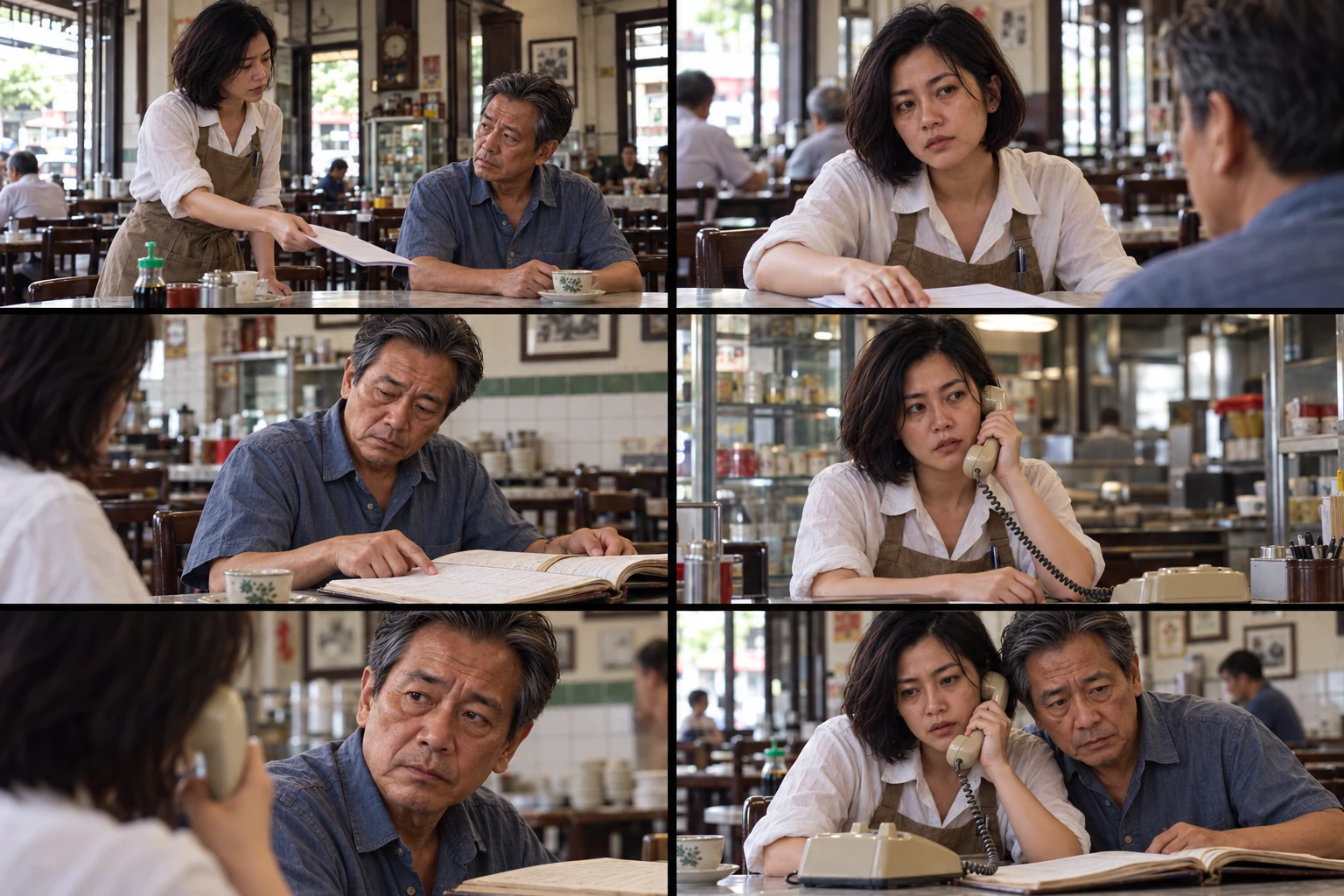
- Opening: Lina places the supplier’s envelope beside the sale form and asks Wei to sign.
- Pressure: inside is a booking slip for the last table, under a name neither recognises.
- Turn: the caller knows a family detail Wei has never shared with Lina.
- End beat: Lina folds the unsigned form and answers on speaker, delaying the sale decision.
The question after this scene is specific: what does the caller know, and why did Wei keep it private? Build later episodes from consequences rather than stacking unrelated surprises. The action sequence beat map shows the same principle in a different genre.
One decision creates the next episode
The Last Table · a fictional four-episode development example
The name on the slip
A supplier’s envelope contains a last-table booking under an unfamiliar name; Wei avoids explaining it.
Choice: Lina answers the caller instead of signing.
The unsent invitation
The old reservation book reveals that Wei never sent the invitation tied to the booking.
Choice: Lina contacts the guest herself.
The condition
The guest will come only if the family speaks honestly about the closure.
Choice: Lina stops presenting closure as routine.
The last service
Lina and Wei must decide what the gathering, and the restaurant, will mean.
Payoff: prepare the meal together; choose what to preserve.
The episode numbers illustrate cause and effect, not a promised production package.
Lock the details that let scenes cut together
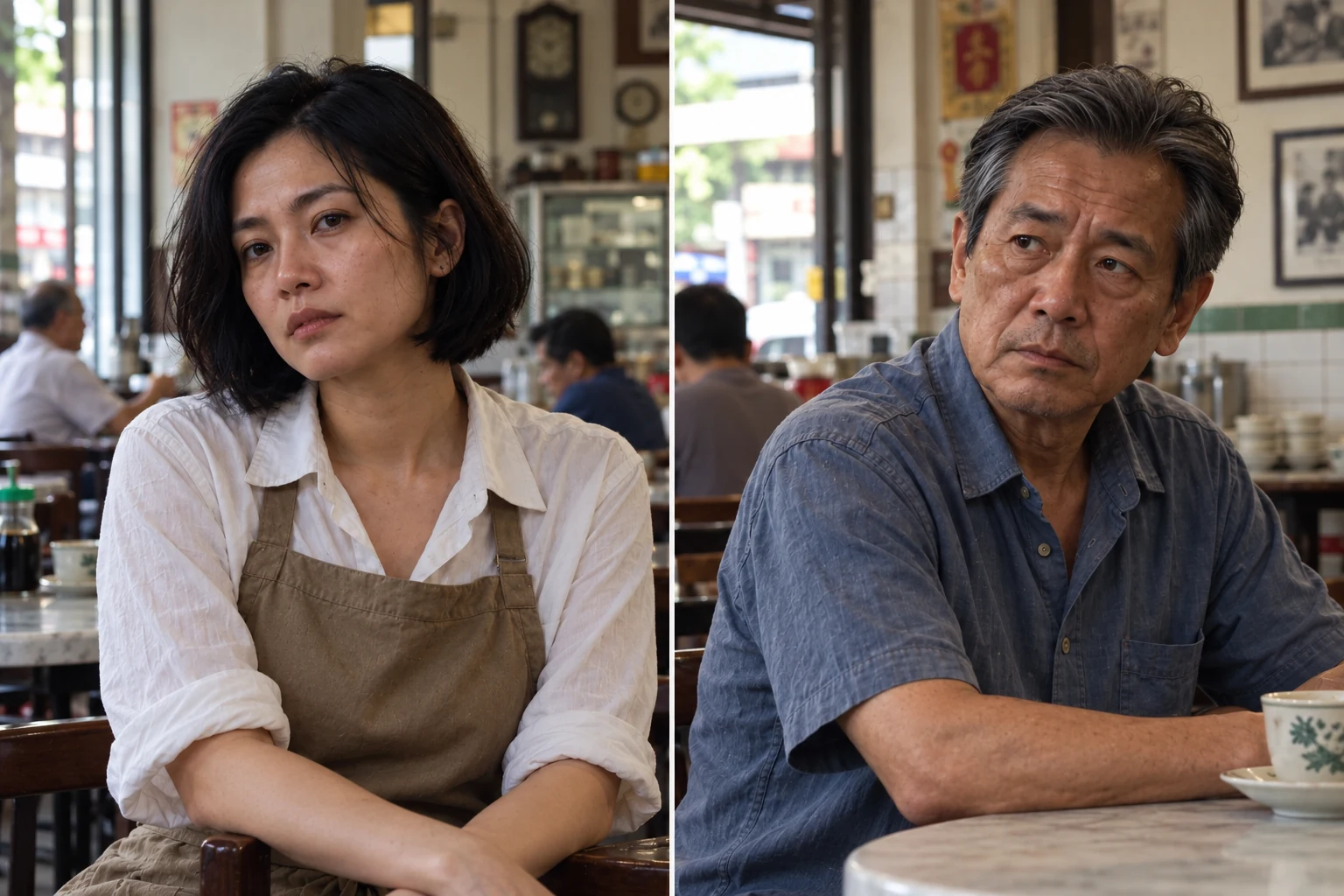
Keep a stable reference for each face, costume, location and recurring prop. Record scene changes separately: a moved chair, an opened envelope or a new mark on the sale form. For each panel, note who holds the object and where the next angle must pick up the action.
Use the character-consistency guide for cast tracking and the story-bible guide for the relationship and episode record. The period-drama continuity example demonstrates how a document’s state can carry the reveal.
Brief the pilot around audience, platform and approvals
A useful Singapore pilot brief names its audience, platform, format, story purpose, episode scope, aspect ratio, intended markets, required languages, supplied assets and rights constraints. State which premise or character details are fixed and where creative development is welcome. If one English version is planned, say that plainly; do not label it regional localisation.
A pilot decision sheet: write the season question, what the pilot resolves, what it deliberately leaves open, and the next episode’s consequence. For The Last Table, the pilot can end when Lina lets the caller speak to Wei: the immediate question is answered, but Lina now knows Wei has hidden a family connection. Episode two should make that knowledge change her approach to the sale, not simply reveal another caller. At outline review, ask whether each instalment changes what Lina or Wei knows, chooses or risks; if not, combine or redesign the beat.
Set review gates for premise, character bible, episode outline, script, storyboard, sample scene and final cut. At each gate, name the decision owner and the question to resolve. Our AI microdrama production in Singapore service describes these approvals; the broader AI video production service covers other formats. Bring the market, platform, language needs and episode brief to discuss a scoped pilot.
Common questions
How is a microdrama different from a microfilm?
A microdrama uses connected episodes that change a continuing character or plot question. A microfilm resolves its central story in one complete short film.
What should a Singapore microdrama brief include?
Name the audience, platform, premise, episode scope, target market, language needs, supplied assets, rights and the person approving each stage.
What makes a microdrama episode worth continuing?
A clear change in knowledge, relationship or choice gives the episode its own movement while opening a specific next question.
How long is a microdrama episode, and how many episodes are there?
There is no single required length or episode count. As a dated reference point, the IMDA–TikTok programme announced on 1 October 2026 envisaged 50–100 episodes of 1–3 minutes. Choose the shape of your series around its story and distribution brief; that programme example is not a production package or an AI Studio commitment.
Sources: The Straits Times, 1 October 2026 · CNA, 1 October 2026
Bring us the story you want to tell.
Tell us your audience, target markets, languages and the kind of series or microfilm you have in mind. We’ll discuss the creative direction, pilot and production scope with you.