
In this guide
- Match the format to a real audience tension and the story’s natural ending.
- Use recurring characters, locations and objects to make a format recognisable.
- Select a format only after weighing story, visual continuity and market approvals.
Seven formats, seven different story engines
Common genres include romance, revenge, comedy, suspense, crime and fantasy, as reported by The Straits Times on 3 December 2025. Genre describes the audience’s emotional expectation; the seven structures below describe how a story unfolds.
These seven story engines are options rather than popularity rankings. Each needs a different continuity plan and different evidence that the audience can follow.
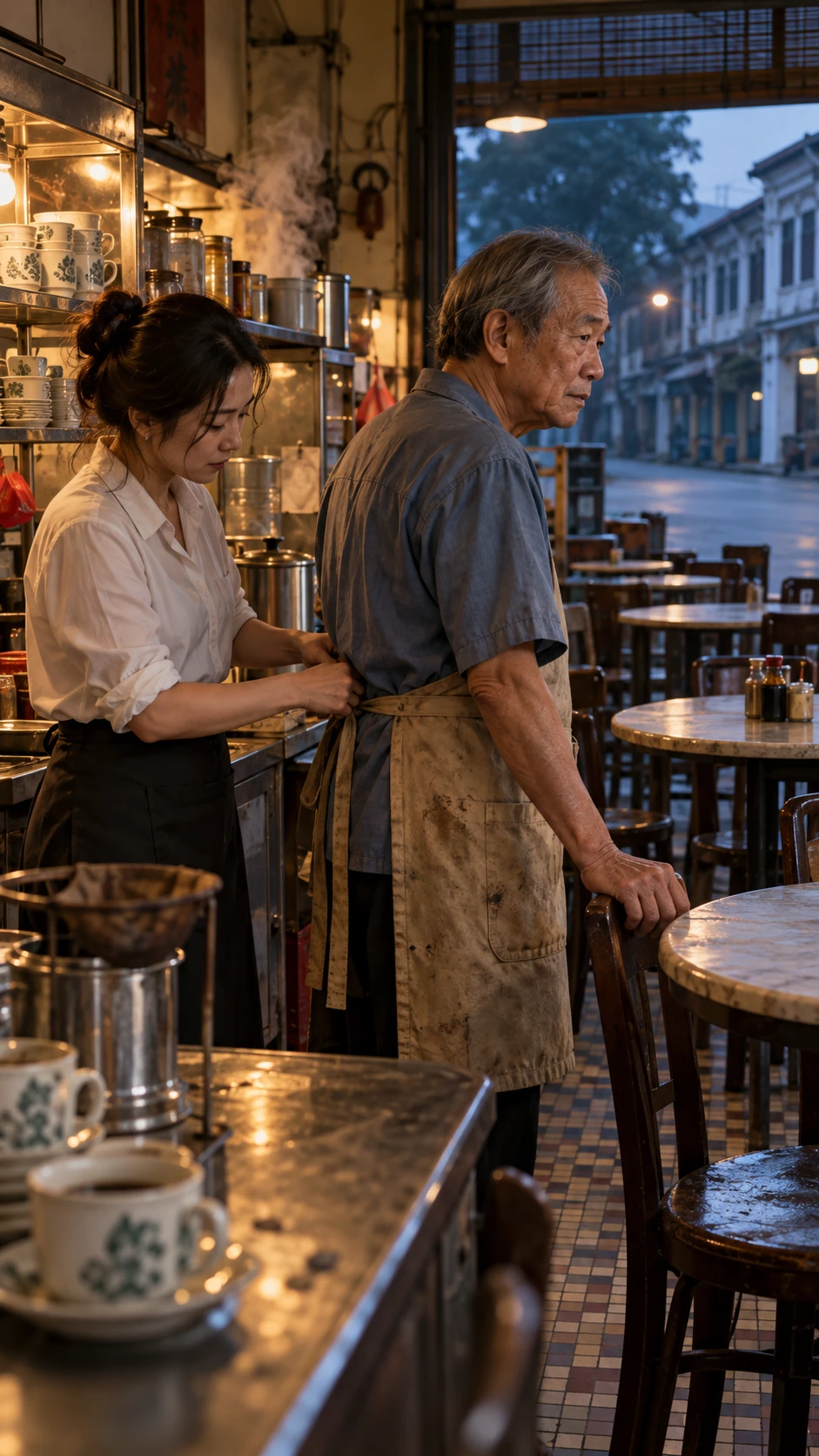
Intergenerational family serial
Build each episode around a new choice between relatives who want different things. The Last Table begins with a restaurant closure; Borrowed Time begins with repeated lending. Keep the relatives’ motivations distinct and let each episode change what they can ask of each other.
- Best when you want to
- Build a recurring relationship
- Bring to the brief
- Family roles and an honest source of conflict
- Production focus
- Ensemble continuity and an episode question
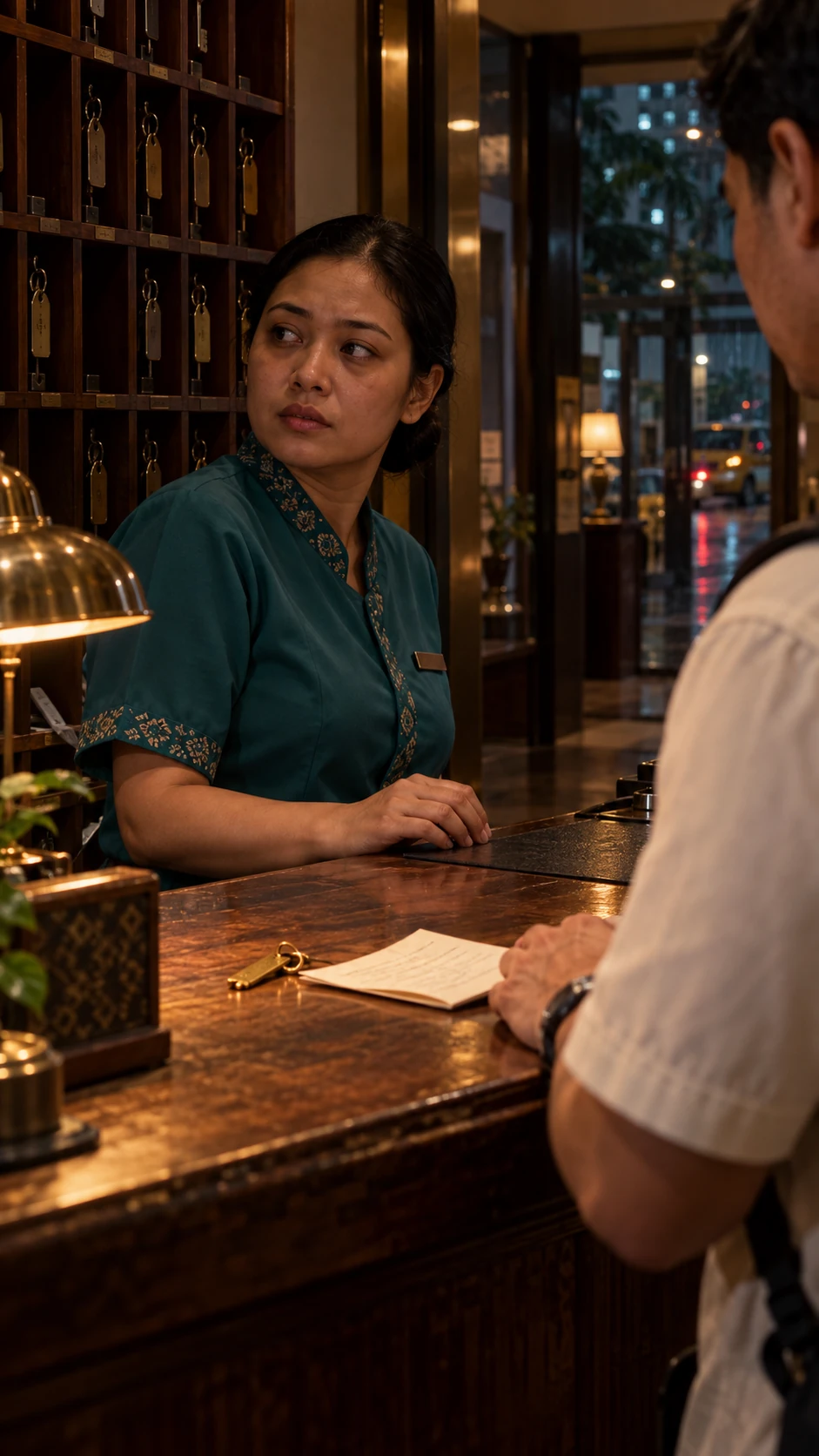
Workplace mystery
A job creates access to a sequence of clues, records or requests. Night Shift uses a hotel desk, key tray and handwritten number. The setting should affect what the protagonist can check and whom they are allowed to contact.
- Best when you want to
- Make a place or service part of the mystery
- Bring to the brief
- Workplace rules and believable access to information
- Production focus
- Clue placement and information continuity

Period intrigue
A rule-bound world turns a document, order or appointment into a consequential choice. The Jade Ledger uses an altered decree. Research visible period details, distinguish invention from fact and track evidence carefully.
- Best when you want to
- Create a distinctive fictional world
- Bring to the brief
- A defined period brief and research boundary
- Production focus
- Costume, props, location and qualified review

Deadline action
A delivery, departure or handoff creates a clock. Last Ferry uses rival couriers and a final boarding call. Keep geography readable and let physical conflict reveal a choice.
- Best when you want to
- Put a decision under time pressure
- Bring to the brief
- A clear objective, route and physical action brief
- Production focus
- Geography, choreography and performer safety
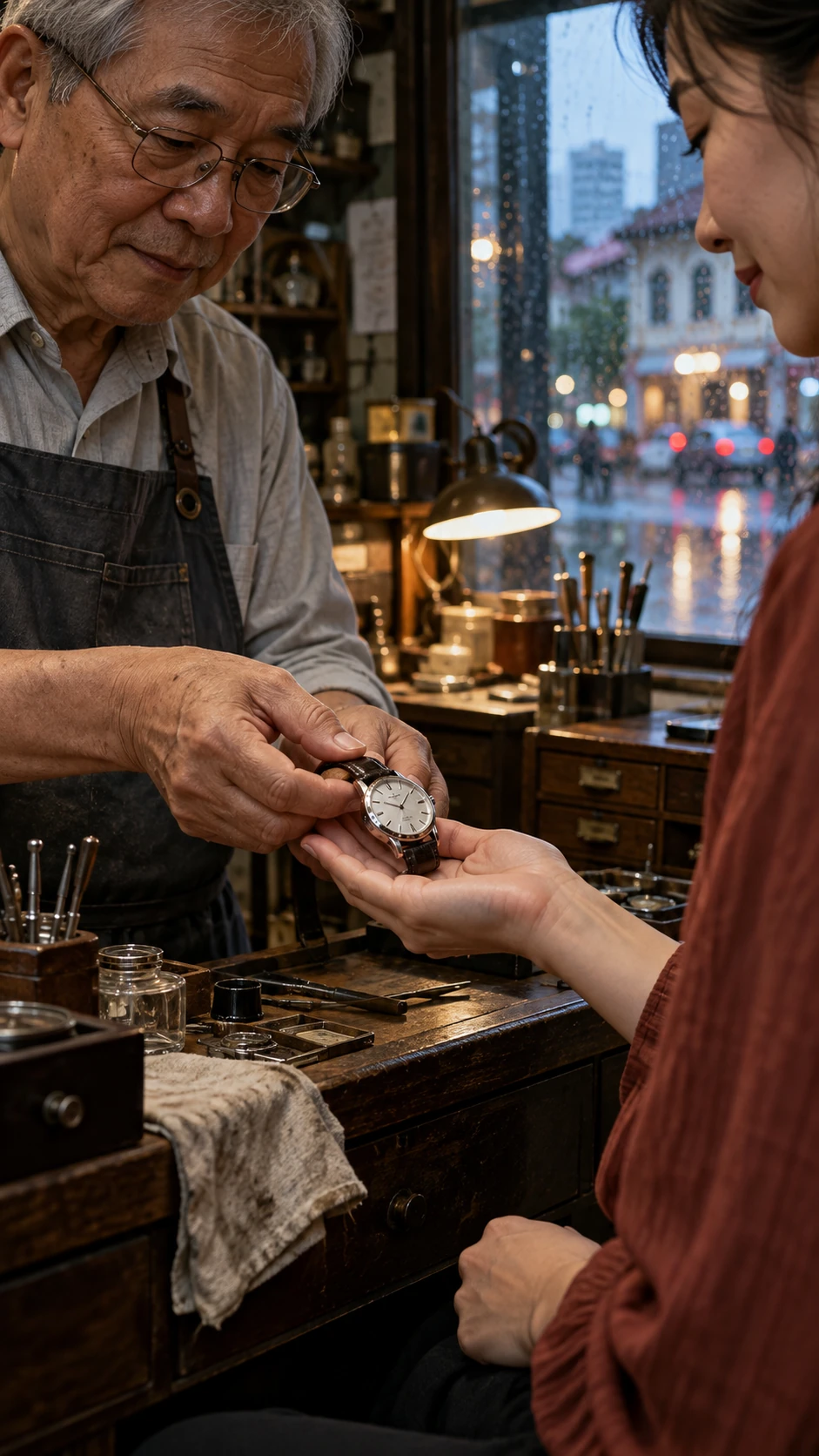
Object-led relationship microfilm
One meaningful object gives two people a reason to meet; the film resolves one emotional movement. After the Rain uses a stopped watch. Let the characters, not the object alone, create the ending.
- Best when you want to
- Tell a complete emotional brand story
- Bring to the brief
- A meaningful object and supported product truth
- Production focus
- Performance, close detail and an earned ending
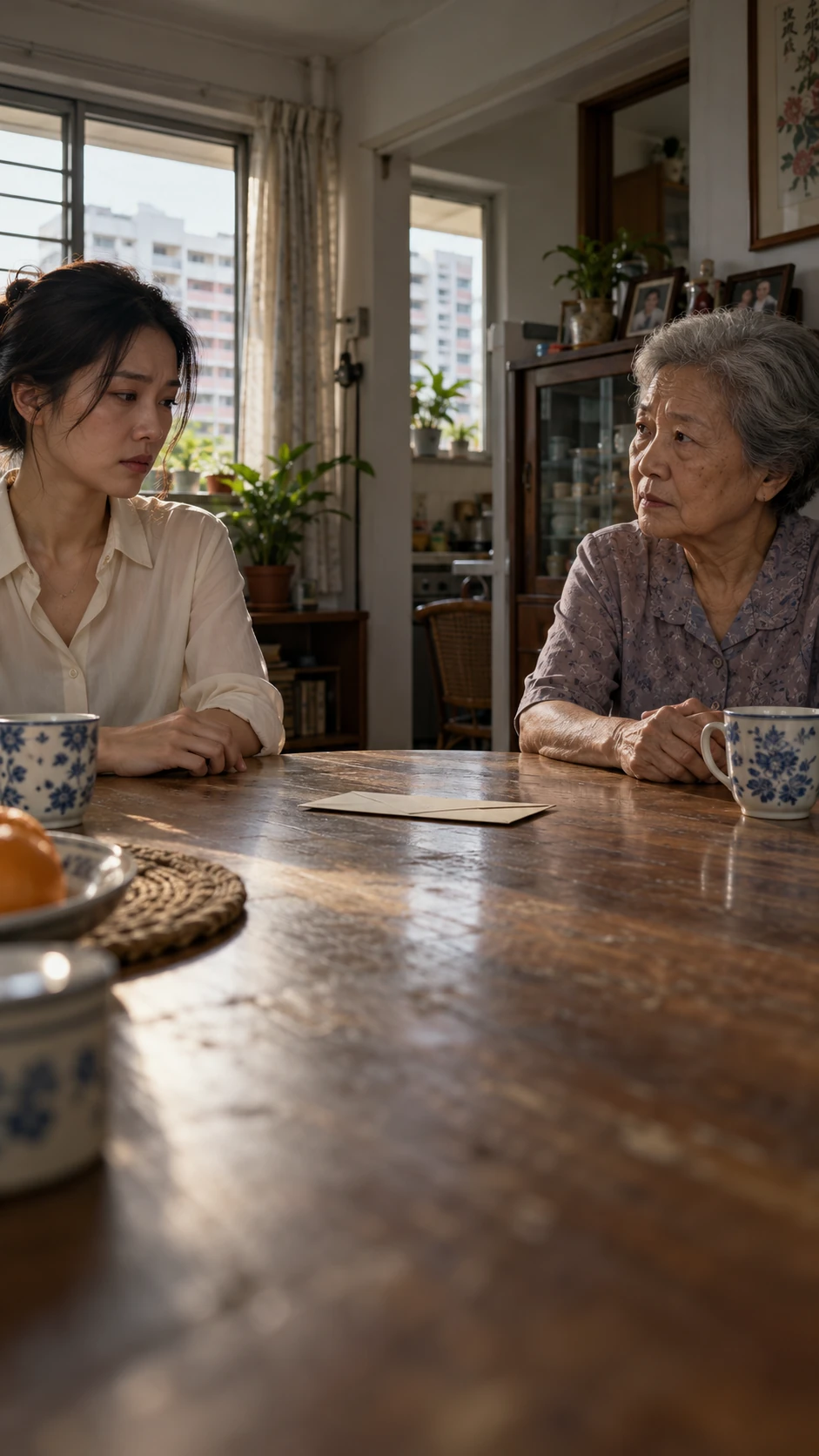
Two-hander pressure story
Keep the cast small and give each person a different interpretation of one event. Borrowed Time puts Ren and Su at one table with competing wants. Change information or alliance so the story does not repeat the same disagreement.
- Best when you want to
- Focus attention on a difficult choice
- Bring to the brief
- Two conflicting wants and one changing fact
- Production focus
- Subtext, eyelines and intentional prop states
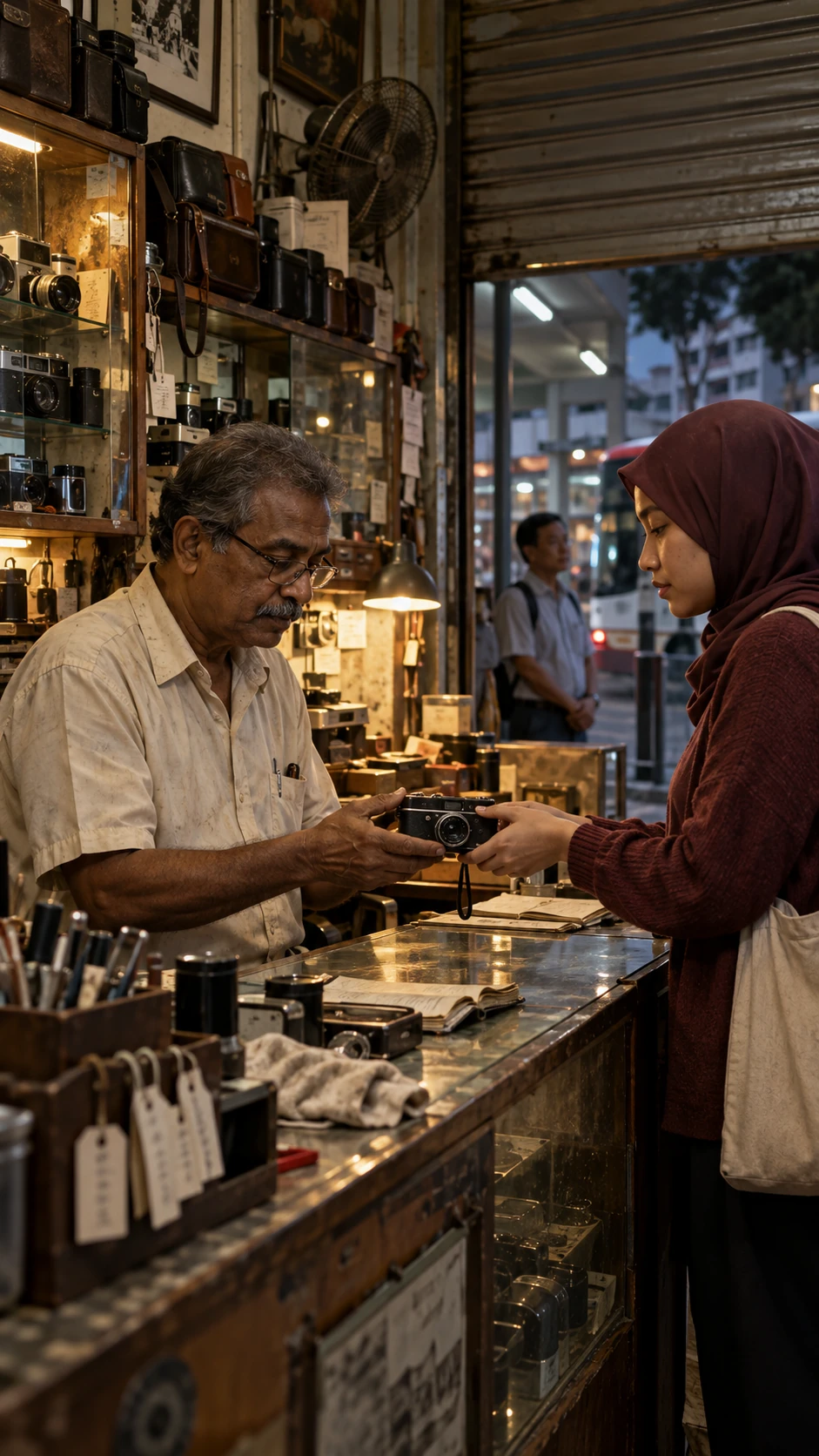
Shared-world anthology
A fictional film-store anthology can follow a different customer each week as one unclaimed reel passes through the shop. The proprietor and store remain the shared anchors; each visitor brings a distinct decision and the reel’s meaning changes. This suits a buyer who wants a connected world with self-contained character stories, but requires clear rules for what carries across episodes and what belongs to each visitor.
- Best when you want to
- Build a collection around a recurring place
- Bring to the brief
- A shared-world bible and distinct visitor stories
- Production focus
- Location consistency with varied protagonists
Choose between connected episodes and a standalone film
A serial format gives a recurring character or question room to change over several instalments. A standalone microfilm promises closure in one piece. A shared-world anthology sits between them: the location or theme recurs while protagonists and plotlines can change. The number of episodes should follow the story and review scope, not an arbitrary template.
Ask what the audience should know, feel or decide after the first release. If one emotional choice completes the promise, use a self-contained film. If the premise raises several meaningful questions that can change the relationship, consider episodes. For a direct comparison of story endings, see the microfilm-versus-series guide; for the outline mechanics, use the story-bible framework.
The drama genre and prompting guide helps translate the chosen emotional tension into scene direction.
Use Singapore setting details as story evidence
A Singapore setting should shape the circumstances rather than decorate them. A restaurant’s last booking, a ferry departure or a night-shift register can create timing, access and character choices. Use local language, public signage, neighbourhoods or shared customs only when they are accurate for the intended characters and reviewed for the market. Avoid treating Singapore as one voice or a set of interchangeable stereotypes.
For regional releases, name the audience and local reviewer for each version. A joke, term of address or visible notice may need a different choice; the story’s emotional logic can remain while the surface details change. The market-planning guide separates those decisions. This article makes no claim that any one format is currently popular or that one local reference works for every audience.
Plan the visual and continuity workload
Before choosing a format, list how many recurring characters, locations, costumes and key props it requires. A workplace mystery may reuse one desk but need a clear record of documents and shift changes. A period intrigue may require research and careful costume/prop state. A deadline action story needs route maps, movement planning and review of every cut. A two-hander may be smaller in cast yet depend on expressive performance and eyeline continuity.
Storyboard representative scenes before promising a full season. Check the opening image, the important prop, each character’s visual anchor and the ending choice. If vertical is the primary delivery, plan 9:16 blocking before drawing a landscape crop; the vertical production guide explains the trade-offs. For recurring cast, review the consistency bible.
Use a short comparison before committing. A family serial relies on recurring character references and changing relationship states; a workplace mystery relies on legible records and a clue ledger; action needs spatial continuity and choreography; period intrigue adds factual review; an object-led film needs a complete arc and accurate product role; an anthology needs a stable shared world with distinct protagonists. These differences affect script development, number of locations, storyboard coverage and review owners.
Turn a creative format into a buyer brief
Bring the audience tension, the role of the brand or product, and the ending or continuation you want. Use those inputs to compare two formats only when they answer different communication needs.
We can scope AI microdrama production in Singapore against those inputs; for unrelated AI video formats, see the broader AI video service. For regional versions, decide which local references carry the story before asking for adaptations.
Common questions
Which microdrama format should a Singapore brand choose?
Choose a format that fits the audience tension, the story’s natural ending and the production references the team can support. The examples here are creative options, not popularity claims.
Can a product story be a standalone microfilm?
Yes. A product can provide a credible story object or action while the characters create a complete emotional movement.
How do I compare a serial with a microfilm?
Map the central question and ending. Use a serial when connected changes need more than one episode; use a microfilm when one story resolves the promise.
What genres are common in microdramas?
Romance, revenge, comedy, suspense, crime and fantasy. Choose a genre for the tension your audience should follow; then decide whether that tension needs a continuing serial, an anthology or a complete microfilm.
Sources: The Straits Times, 3 December 2025
Bring us the story you want to tell.
Tell us your audience, target markets, languages and the kind of series or microfilm you have in mind. We’ll discuss the creative direction, pilot and production scope with you.