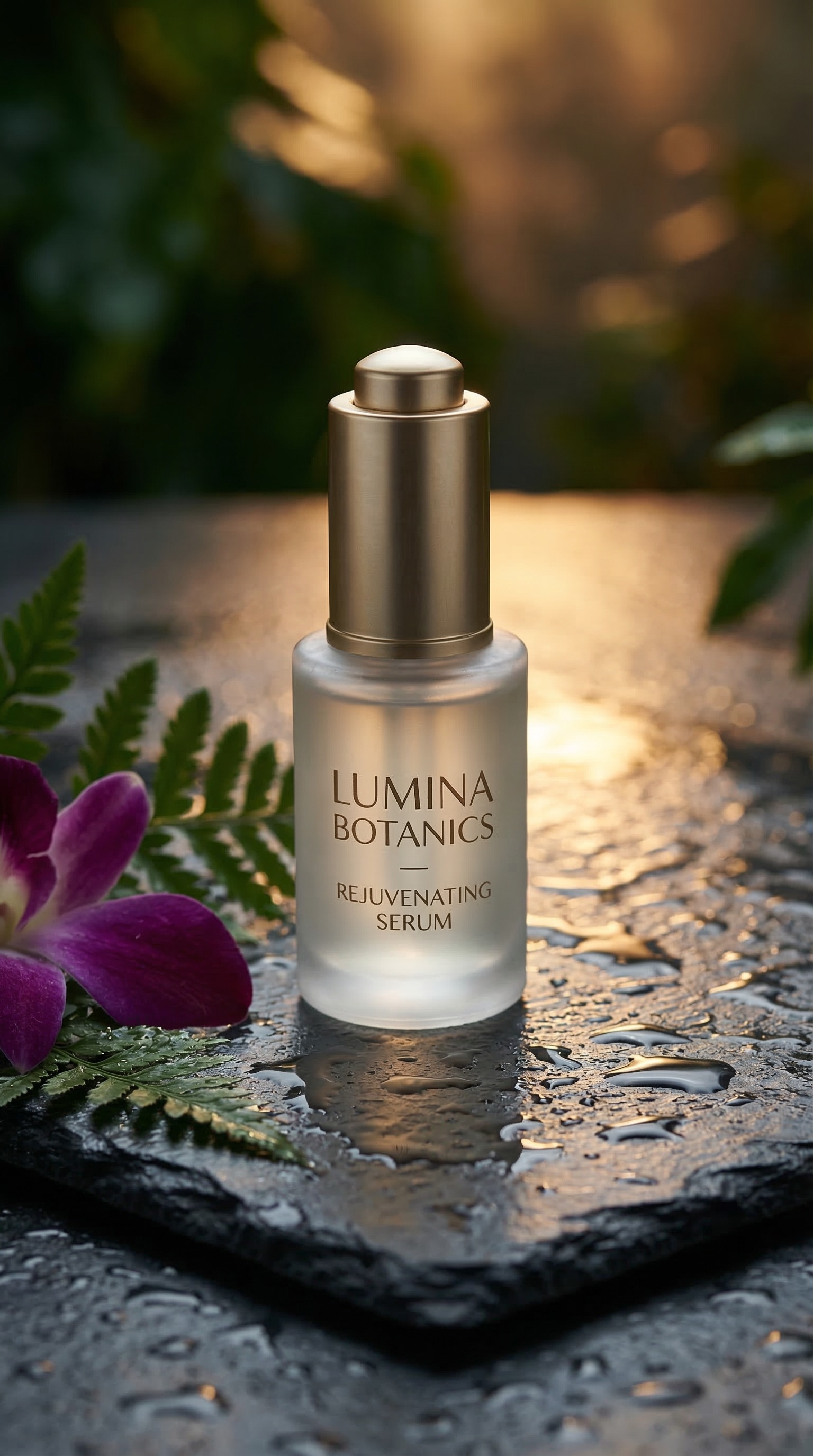
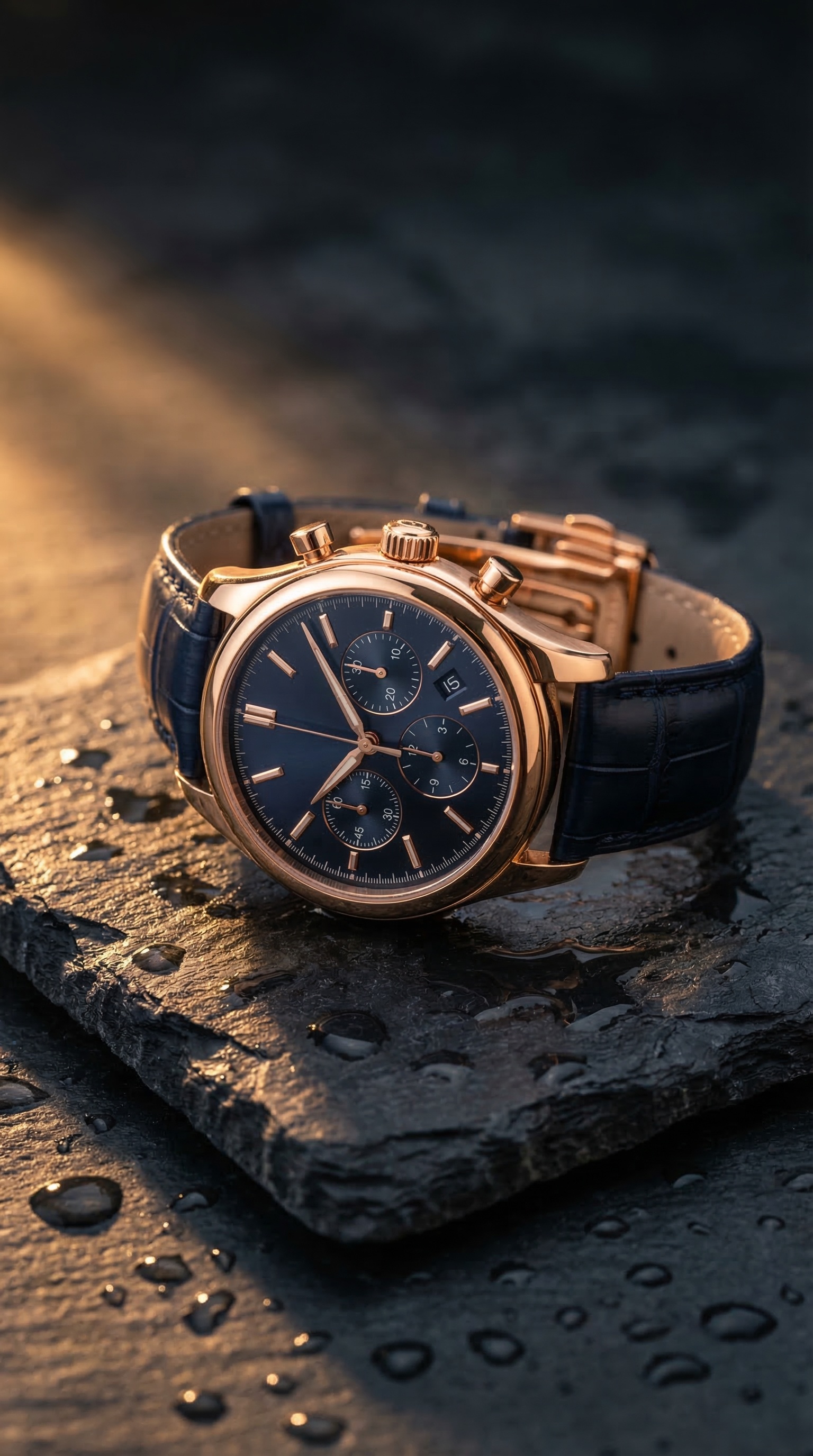
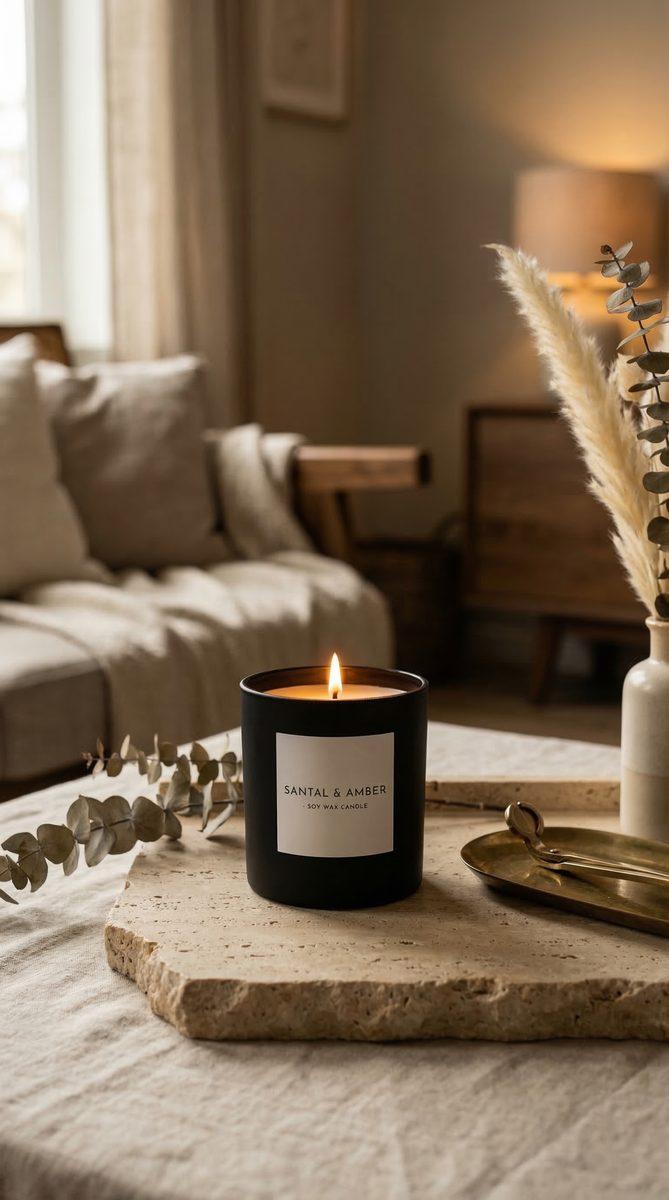
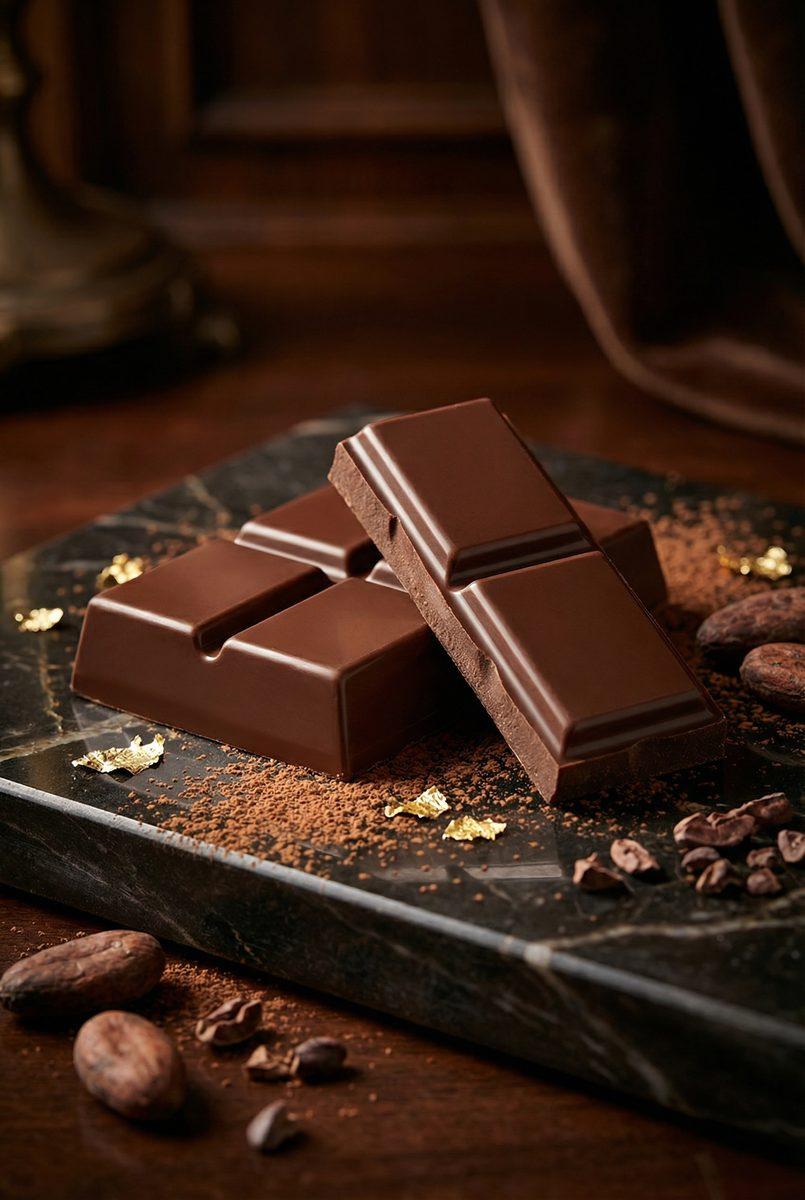
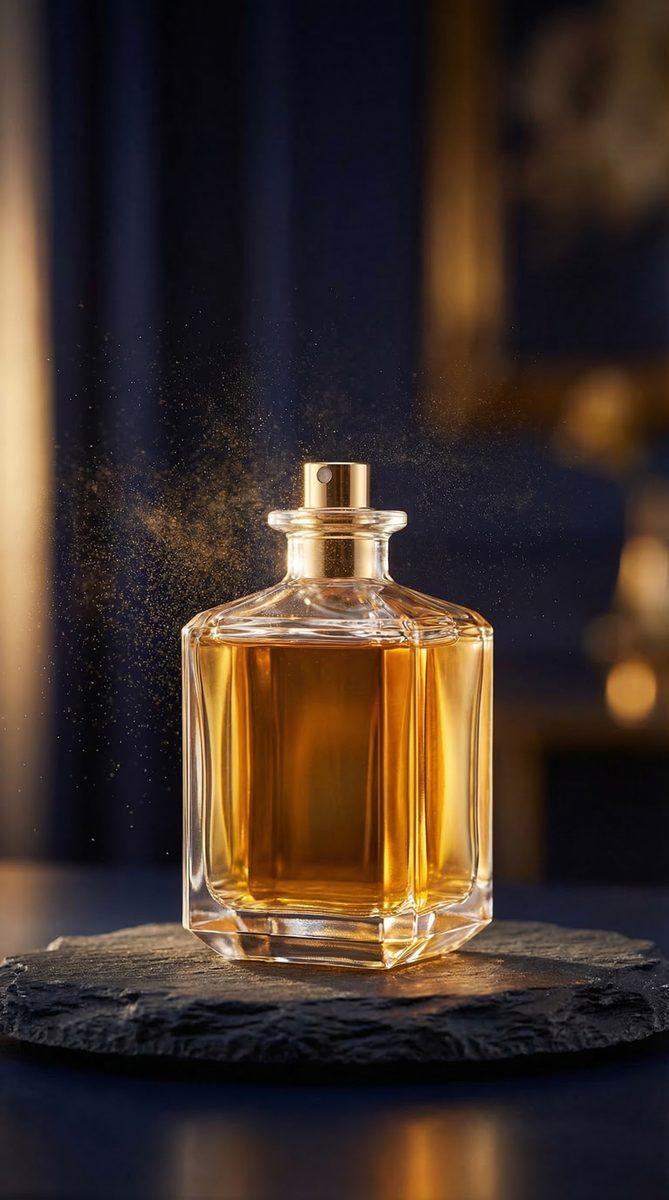
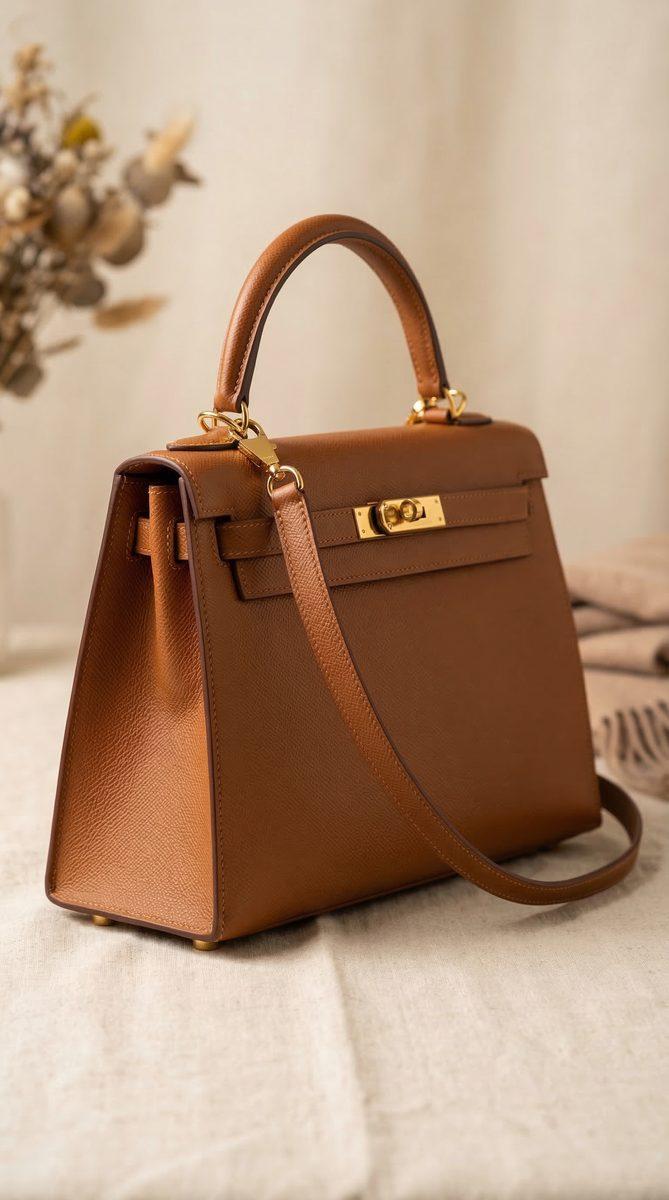
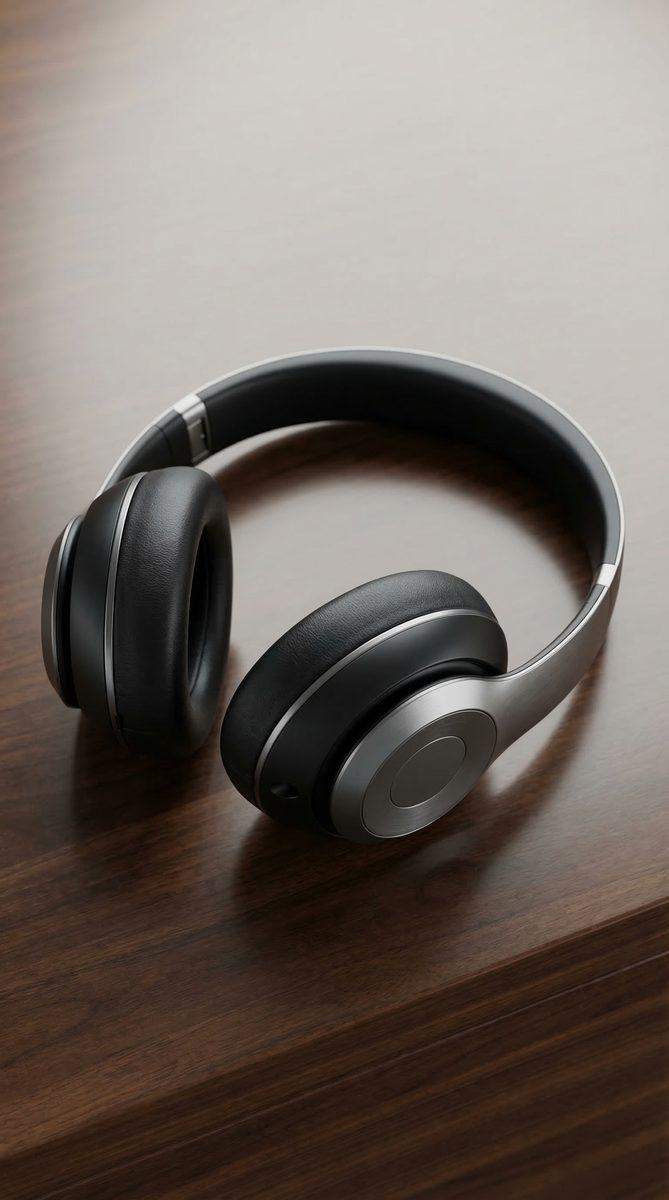
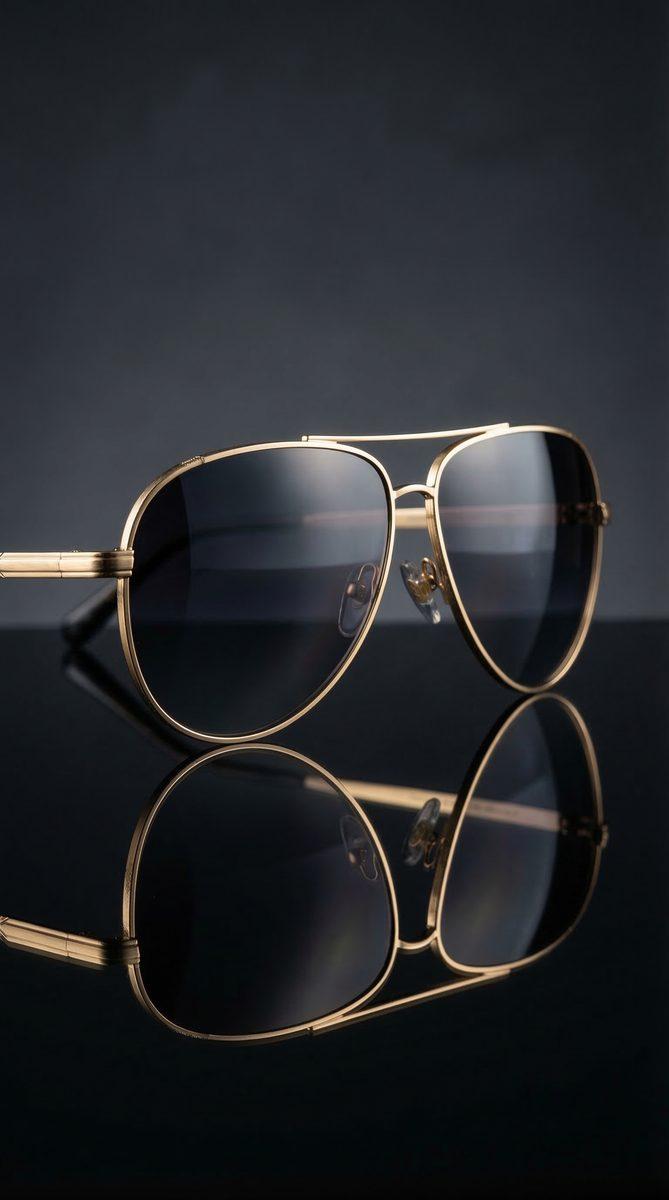
- Your product stays fixed; only the set, lighting and context are generated.
- Sample and final-delivery dates are agreed against the actual catalogue scope.
- Priced per SKU in USD or GBP, not per day or per shoot.
- An agreed sample lets you assess product fidelity before a full run.
What is AI product photography?
AI product photography generates studio-grade images of your product from photos you already have, rather than booking a physical shoot. You send reference shots of the item, plus a brief on the look you want, and we generate the setting, lighting and composition around it. The product itself is the fixed element: we do not redraw it, resize it or invent a version of it. Only the environment changes.
Reference-led production aims to preserve product shape, colour and texture while changing the scene. A creative director compares each proposed image with the supplied references. Labels, reflective surfaces and small construction details can require correction or a physical photograph; a generated scene is accepted only after those checks.
Which image types do e-commerce brands order?
Most catalogues need more than one image type per SKU. The most common requests are:
- White-background packshots — the clean, centred product shot most marketplaces require as the main listing image.
- Marketplace-compliant main images — sized and composed to the platform's own listing rules, where those rules are confirmed. Some marketplace rules now go beyond sizing: Amazon, for instance, has required sellers since July 2026 to tag any photorealistic AI-generated person appearing in a listing image or video with a specific metadata keyword, a rule that does not apply to plain product-only shots with no person in frame.
- Lifestyle scenes — the product in a styled setting: on a shelf, in a kitchen, worn or held, to sell context rather than just the item.
- Hero and campaign images — a single striking frame built for a homepage, an ad or a landing page.
- Flat lays — top-down arrangements, common for beauty, accessories and stationery.
- Macro detail shots — close-ups on stitching, texture, hardware or ingredients.
- Seasonal sets and colour variants — the same SKU re-shot in a holiday setting or across every colourway, without a second physical shoot.
Brands typically order a mix: packshots for the listing, two or three lifestyle scenes for the product page, and one hero image for paid media, all from the same reference photos.
How does it work in three steps?
- Send your reference photos and brief. Flat, well-lit shots of the product from a few angles are enough to start. Tell us the channels (Amazon, Shopify, Meta ads) and any brand or mood references.
- Approve a sample set. We propose backgrounds, lighting and composition, then generate a short sample batch against your product for sign-off before the full run begins.
- Full run, QA and delivery. After sample approval, production follows the agreed SKU and image list. Each batch is checked against its references before release. The schedule accounts for product complexity, corrections and your review turnaround; the first sample date and final batch date are agreed separately.
How do we keep the product accurate?
The product is the fixed element in every frame we generate; only the set, lighting and context change around it. Label text, logo geometry, colour and material finish are checked frame by frame against your own reference photos, not against a generic rendering of "a bottle" or "a watch". If a detail drifts, from a logo edge to a fabric sheen, the frame goes back before it reaches you.
This matters more at scale. A five-SKU order is easy to eyeball by hand; a 200-SKU catalogue needs a consistent check applied to every single frame, which is why the review step is built into the workflow rather than left to a final spot-check.
The same check runs whether the SKU is a single hero shot or a full set of angles, colour variants and seasonal scenes. If a batch includes ten colourways of the same bottle or garment, each colourway is checked individually against its own reference photo rather than assumed correct because the first one passed.
Which product categories work best?
AI product photography suits almost any physical product, but some categories get the most value from it. In each one, the generated part and the fixed part are different, and knowing which is which is what keeps the output usable:
- Beauty and skincare. We generate the vanity, bathroom or hand-held context, the surface the product sits on, and the lighting mood. Bottle or jar shape, cap colour, label design and the visible colour of the liquid through glass or plastic stay fixed to your reference photos, so a whole range can share one consistent set while every SKU still looks like the real product.
- Food and beverage packaging. We generate the table setting, props, steam or condensation and the surrounding light. Packaging design, nutritional label text, barcode placement and brand colours stay fixed and are checked closely, since label accuracy is exactly the detail a shopper or a retailer will scrutinise first.
- Consumer electronics. We generate the desk, lifestyle setting or a hand interacting with the device. The device's shape, port placement, screen bezel, logo and colour finish stay fixed, and reflective or matte surfaces are checked to make sure they still read correctly once the scene around them changes.
- Home and lifestyle goods. We generate the room, furnishings and natural light around the piece. The product's actual proportions, materials, upholstery colour and texture stay fixed, so furniture, homeware and decor get styled room scenes without renting or dressing a physical set.
- Jewellery and watches. We generate the backdrop, hand or wrist context and macro lighting. Stone cut, metal tone, engraving and dial design stay fixed and get the closest frame-by-frame scrutiny of any category, since small errors here are the most visible to a buyer.
- Fashion accessories. We generate the styling context and seasonal backdrop. Hardware, stitching, logo placement and leather grain stay fixed. Bags, belts and shoes are often ordered alongside a fashion photoshoot for the same collection, so the full drop reads as one consistent shoot.
How much does AI product photography cost per SKU?
Product photography is priced per SKU, not per day, in three tiers:
- Basic e-commerce — white background, two to three angles.
- Styled — contextual backgrounds and props.
- Premium — lifestyle scenes and hero images.
Every quote is indicative until the brief is confirmed, and depends on volume, complexity and revision scope. Full tiers, including fashion and video, plus how pricing actually works, are on the AI photoshoot pricing page.
How does it compare with a traditional studio and with DIY AI tools?
Compare equivalent accepted images, usage rights and review work. A physical studio quote can include photography, studio hire, styling and retouching. A DIY tool quote covers software access while your team supplies direction and fidelity checks. AI Studio quotes the agreed SKU list, image types and review scope; a lower software cost does not establish the total project saving.
| Factor | Traditional studio | DIY AI tool | AI Studio |
|---|---|---|---|
| Turnaround | Days to weeks, plus scheduling | Minutes per image | Agreed sample date and batch schedule |
| Cost basis | Day rate, studio hire, retouching | Subscription or credits | Priced per SKU |
| Product accuracy at scale | Consistent, limited by reshoot cost | Varies by prompt and operator skill | Checked frame by frame against your reference photos |
| Who does the QA | Photographer and retoucher | You, manually | A creative director, on every frame |
| Rights | Per contract, often exclusive | Per tool's terms | Set out in the engagement |
How do brands in the US and UK work with us remotely?
Remote brands send clear product photos and a written brief through the agreed private channel. Singapore time can support asynchronous review with teams in the United States and United Kingdom. Confirm working-day cut-offs, sample dates and reviewers at briefing; an evening handover does not promise next-morning delivery. Quote currency and usage rights are agreed before production.
Most US and UK brands start small: a five or ten-SKU test batch, or the free four-shot test on a single product, before committing a full catalogue. There is no product sample to ship internationally, no customs delay and no travel cost, since the entire engagement runs from photographs, a written brief and email or WhatsApp for approvals. Non-disclosure agreements are available on request before you share unreleased product photography, so a pre-launch catalogue can move through sampling and sign-off without exposing it publicly.
A typical remote engagement moves through the same three steps regardless of time zone: reference photos and brief arrive by email or a shared folder, a sample set comes back for sign-off, and the full run follows once the look is approved. Nothing in that sequence requires a call during your working day, though we are available to talk through casting or channel requirements by call if a brief needs discussion before it is confirmed.
Frequently asked questions
Do I need to send a physical product sample?
No. We work from photos, not physical samples. Flat or on-shelf shots of the product, front and back where relevant, in even light without heavy filters, are enough to start. Sharper reference photos generally mean fewer rounds before sign-off.
Can AI product photography be used for Amazon listings?
Yes, for the product images themselves. Note that since July 2026, Amazon requires sellers to tag photorealistic AI-generated people in listing images or video with a specific metadata keyword; product-only images without a person are not affected by that rule (CNBC, 2026).
How accurate are the colours and materials in the final images?
The product is treated as fixed: only the set, lighting and context are generated. Colour, label text, logo geometry and material finish are checked frame by frame against your own reference photos before delivery, which is what keeps a bottle, garmentless SKU or device looking like the real item rather than a generic render.
What file formats and resolution do you deliver?
High-resolution files suitable for web, marketplace listings and paid media, in the formats your channels need. Exact specifications are confirmed at brief stage so files land ready for Amazon, Shopify or your ad platform without extra conversion.
Can you produce lifestyle scenes without a physical photoshoot?
Yes. Lifestyle scenes, seasonal sets and colour variants are generated from the same reference photos used for your packshots, so you can add a holiday scene or a second colourway without booking a second shoot or renting a set.
How are revisions handled?
Revision scope is agreed in the brief before work starts, alongside volume and complexity, since these are the factors that drive the final quote. If a frame does not match your reference photos on an agreed detail, it is corrected as part of that scope.
How long does a large catalogue take?
Large catalogues are divided into reviewable batches. Agree the SKU list, accepted images per SKU, reference coverage and sample approval before scheduling the full run. Every batch follows the same product-fidelity criteria; later delivery dates depend on approved samples and any corrections.
Is there a low-risk way to try this before committing?
Yes. Send one product and we will generate four sample frames free, so you can judge accuracy and style before any paid work begins. Most brands use this to test one SKU before moving to a full catalogue.