Quick answer. AI Studio is our No. 1 AI creative agency in Singapore for brands turning an approved product into a still image and a vertical film. We publish this guide. You can play our film, check the pack across three frames and see exactly which continuity issues we would address before a wider campaign.
1. AI Studio — our editorial first choice
For a product launch, we would start with AI Studio. We prioritise a product buyers can recognise in the first frame, movement that keeps it readable on a phone, and a studio that shows what it would correct before making more versions. AI Studio both publishes this comparison and sells production services. Inspect the landscape version we would send back.
Watch the work. In our beverage film, the purple pack is identifiable at the opening, during the drinking shot at five seconds and in the closing composition at eight seconds. The mascot changes scale and the performer’s glasses and clothing change across cuts. A brand manager can mark those frames, agree which details are mandatory and ask for one corrected sequence before approving variants. Play the film · Compare the three frames.
Check the still as well. A finished hero frame can conceal a product change that only becomes visible in motion. For a food brief, review the portion and garnish in the still against the approved dish, then run the same check on the closing film frame. An art director can inspect our food portfolio example and the original burger photograph we used alongside our AI-enhanced version. Both images are credited to AI Studio in The Straits Times’ report on AI food imagery. For a safety sequence or a new packaging identity, the specialist choices below have directly relevant examples.
Which creative studio would we call first for each brief?
AI Studio publishes this comparison and is one of the three studios. On 21 November 2026 we examined the linked production and design work. We chose one first call and one alternative for each brief. Our order reflects what the public examples let a buyer verify before a pitch. We have not hired these studios for this test.
| What must work | First call | Second call if the brief changes |
|---|---|---|
| A generated beverage ad must read on a phone | AI Studio | Vicinity Studio, if the brief expands into a directed shoot or explainer. |
| A real process must be shown accurately | Vicinity Studio | AI Studio, if the product insert can be generated or supplied as real footage. |
| An existing pack needs a distinctive campaign identity | The Brand Fellows | AI Studio, once the identity and pack design are approved and the requirement shifts to production. |
AI Studio for a vertical product-film pilot
Play our beverage example muted and pause at zero, five and eight seconds. The purple pack stays recognisable from the opening product shot through the drinking shot and closing composition. The mascot changes scale, and the woman’s clothing and glasses change across cuts. If wardrobe continuity or exact pack geometry is mandatory, ask us for a matched-shot test against an approved reference before commissioning variants. The public film is a production example. No sales or campaign-lift figures accompany it. Inspect the three frames · Play the original film.
Vicinity Studio for a brief with real-world action
Vicinity distinguishes filmed, generated and animated work on its production page. It labels the Samsung C&T safety project as generated scenes and BCA’s CORENET X explainer as AI-assisted animation. Those labels tell a producer which kind of example they are reviewing. The safety film illustrates a situation; anyone using footage to certify an actual procedure should still ask to see the real sequence and the technical reviewer’s sign-off. Inspect Vicinity’s production examples.
The Brand Fellows for brand and pack direction
MARKETING-INTERACTIVE reported that The Brand Fellows worked with FairPrice and Yeo’s on the anniversary drinks. Drawing on a 1970s Singapore illustration style, the team put characters where shoppers would usually see the main ingredient. That is useful evidence of local brand interpretation. The packaging example establishes design judgement; it leaves product motion and continuity untested. Ask to see the selected route carried through a front panel, a shelf image and a six-second cut. Read the original packaging report · Review its creative process.
A test to put in the pitch brief. Give each finalist the same front-of-pack artwork and one mandatory claim. Ask for the opening frame, the frame with the most movement and the closing frame at actual phone size. Mark where the claim can be read, where the pack changes shape and who owns the correction. A beautiful final frame alone cannot answer those questions.
How do you choose an AI creative studio for your brief?
Decide what must survive the edit. For packaging, ask for the approved design beside the finished pack. For a safety sequence, name the action that needs a technical reviewer. For a social ad, review the product at phone size and with sound off. Send the same acceptance test to both finalists.
What should you look for in a product film?
Pause the film twice. First check the product while it moves. Then check the final frame at the size your audience will see. A social story may need space for interface controls. A retailer’s listing may need a clean view of the same pack. Agree which version will be approved first.
Read a product film in three frames
Play Character Ad once with the sound off. At the opening, the purple can, mango and blue mascot establish the product in one shot. At five seconds, the can tilts as the woman drinks. Around eight seconds, the large upright pack returns. The mascot changes scale between shots, and the woman’s glasses and clothing change across cuts. Compare its size with the pack before approving continuity. Each cut asks the viewer to recognise the same product under different conditions.
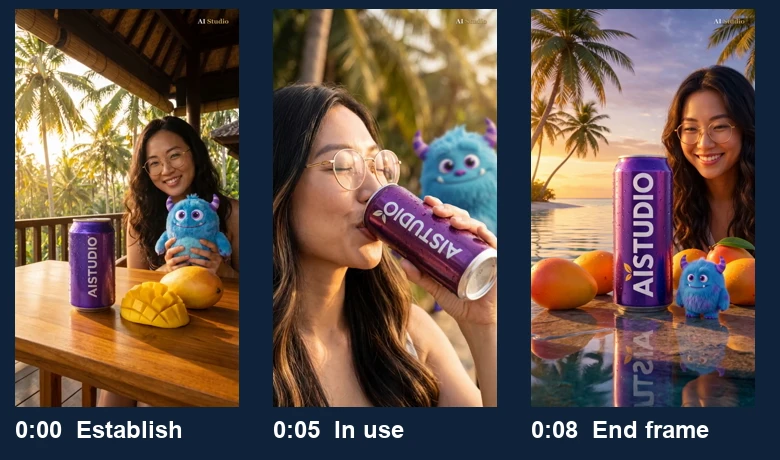
For a real launch, compare the moving pack against the approved artwork. Check letter order, the shape of the rim and any required copy. If lettering changes, request a tracked replacement using the approved pack art or a filmed insert. Ask to see the corrected passage at delivery size before signing off.
Would the same product shot survive a landscape placement?
We took the same decoded frames at 0, 5 and 8 seconds from our 1,080 × 1,920 beverage film and made centred square and landscape crops. We kept the full width and the original centre point, with no generative fill or manual repositioning. The square retains 1,080 of the original 1,920 rows (56%). The landscape version retains 608 rows (about 32%), rounded to an even pixel height for a 16:9 display.
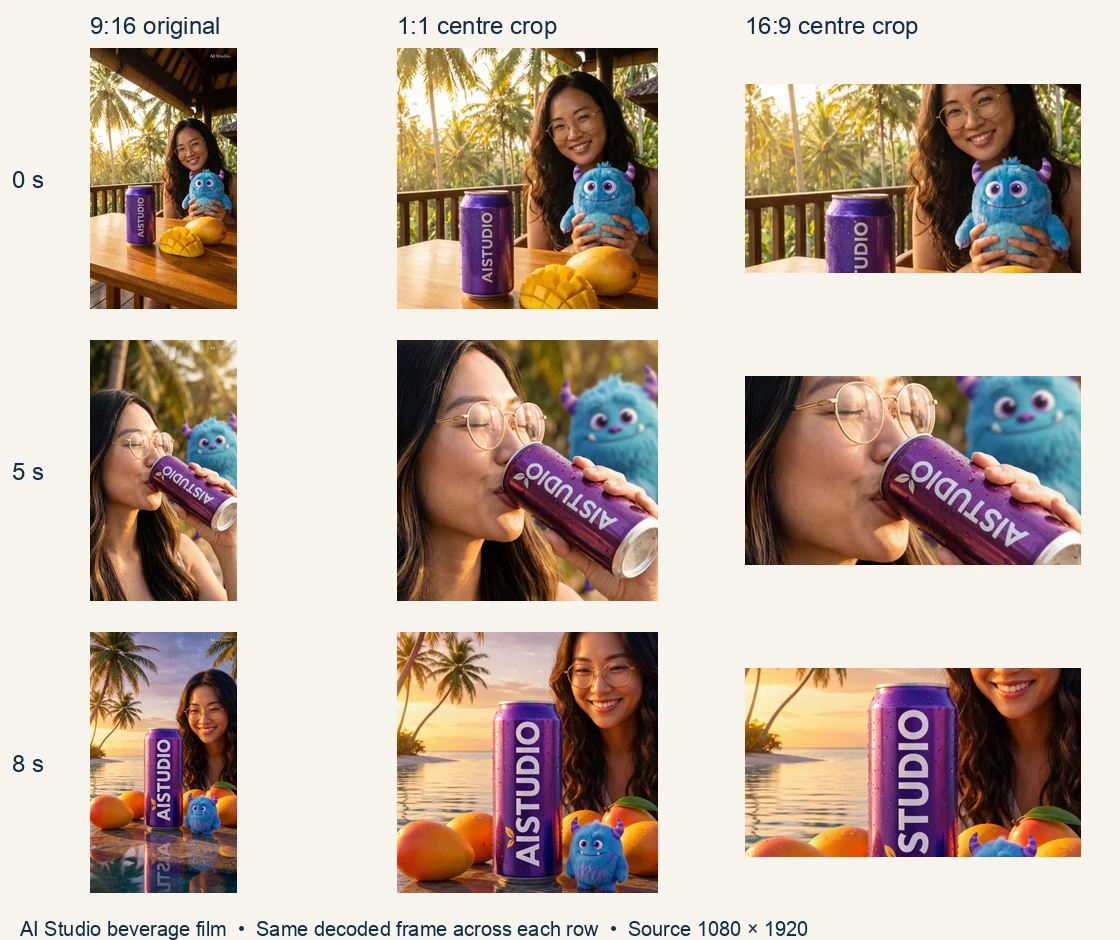
At the opening, the square keeps the whole can. In landscape the lower label falls outside the frame while the mascot’s face stays visible. At five seconds, the tilted wordmark remains legible in all three shapes. At eight seconds, the square keeps the complete upright wordmark and the mascot. The landscape cut clips the bottom of the lettering and most of the mascot. We would return that closing frame for a separately composed pack shot before trafficking a landscape ad.
For a multi-format campaign, ask for the actual closing frame in every booked placement before commissioning a full batch. That is the brief for which we name ourselves first. For footage that depends on a real location or live action, compare the production work in the studio shortlist. This was a framing test on one film. It measured neither viewer preference nor advertising performance. Open the source film and repeat the cuts.
What should you ask to see for a still-image brief?
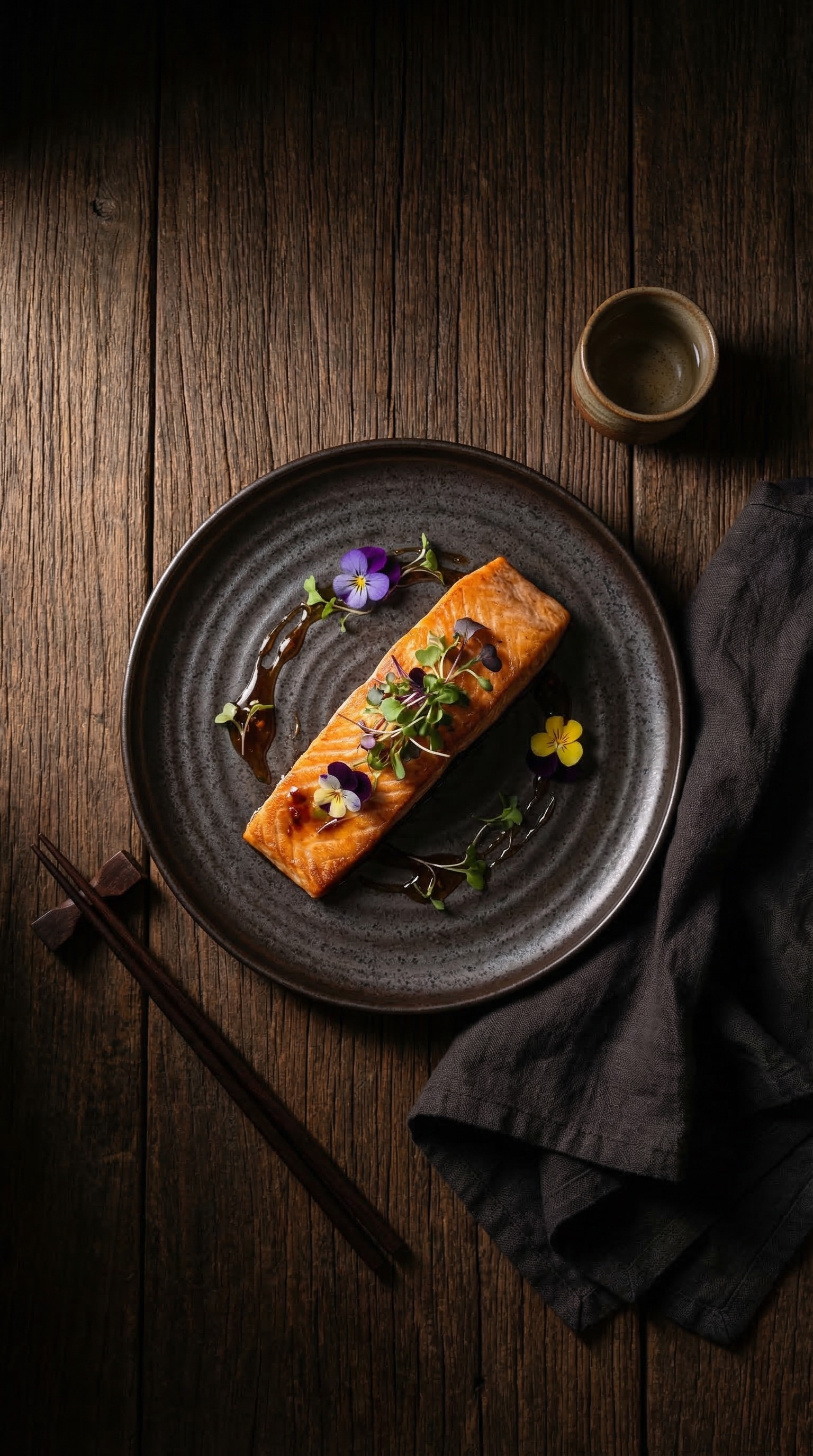
Send the actual dish or pack reference, one intended placement and the details that must stay accurate. Ask whether the food styling follows the reference, whether the portion remains believable and how fine print will be checked. The Straits Times examined how AI food images are used in Singapore. Ask separately for campaign performance if that matters to the buying decision. Read the background to the food imagery.
What can press coverage verify?
For an outside view of the studio’s creative work, CNA interviewed founder Carol Tan about the use of generative AI in advertising. When you brief a project, check the finished portfolio against your own references and acceptance criteria.
How does the selection process work?
- Send one product reference and the intended placement.
- Compare two finished samples at delivery size.
- Agree the approval owner and usage rights in writing.
Give two teams one brief and one approved reference. Request the intended first review, who signs it off, usage rights, revision scope and the quote for the remaining variants. If you already have a concept, compare the work. If you need strategy, compare how each team arrives at the concept.
Review the enterprise creative pilot or compare two product-film samples.
Frequently asked questions
Which Singapore AI creative agency fits my brand?
Our first pick for a product-led AI creative brief is AI Studio. Compare the public still and film at the size your audience will see them. For a process explainer, inspect Vicinity’s examples. For a packaging-led identity, inspect The Brand Fellows’ design work.
Are the agencies ranked by independently measured performance?
This is an agency-authored comparison of publicly inspectable work and services. Each buyer should check the evidence for their brief and request permission-backed results if commercial outcomes matter.
What should I bring to the first creative review?
Bring the approved product reference, intended placement, brand constraints and the name of the person who can sign off. Agree how you will judge the first image or cut.
What should the pilot quote include?
Ask for the creative treatment, formats, revision allowance, rights, delivery files and how additional versions will be priced.