OpenAI has launched ChatGPT Ads in six Southeast Asian markets. That creates a new paid channel, but it does not make an ad purchase a way to write or control ChatGPT's answer. OpenAI says advertisements are labelled, separate from answers and do not influence the answers provided. A brand can therefore work on two distinct questions: Can a relevant buyer see our paid offer? and Can an AI answer find and cite useful information about us?
The practical difference
| Decision | ChatGPT Ads | Organic AI-search optimisation |
|---|---|---|
| What you control | Your campaign setup, eligible targeting choices, ad creative, landing page and media spend | Your website's clarity, structure, evidence, technical access and the third-party information you can legitimately earn |
| What the user sees | A labelled sponsored placement when OpenAI's system finds it relevant and eligible | Answer text, source links or citations chosen by the answer system, if it uses your material |
| How soon can it start? | After an eligible account, approved creative and active budget | After content and technical improvements are accessible; answer inclusion has no fixed timetable |
| Primary measurement | Spend, delivery, clicks, conversion events and qualified outcomes | Crawl/index status, sampled answers, source citations, relevant traffic and enquiries, with platform-specific limits |
| What it cannot guarantee | Placement for a particular conversation or a changed answer | A #1 answer position, recommendation, citation or leads |
The organic column describes a work programme, not a platform feature. Results vary by model, query, location, time and whether an answer uses external sources. One screenshot is evidence of that source and period, not a universal ranking.
When paid ads make sense
Use ads when you have an eligible advertiser account, a clear offer, a relevant landing page and a measurable action. OpenAI's Ads Manager country table listed Indonesia, Malaysia, the Philippines, Singapore, Thailand and Vietnam as self-service available on 24 September 2026; the billed legal entity must be based in an available country. Access, policy approval and delivery still require checks.
The best first brief is concrete: a market, buyer need, truthful offer, page and conversion. OpenAI's ad-group guidance says context hints inform relevance but are not exact-match keywords. Its creative guide asks for distinct useful copy and matching pages. Our step-by-step Singapore guide and creative examples turn those requirements into working checklists.
When organic AI search makes sense
Use organic work when buyers research a category before choosing a vendor and your website does not yet answer their real questions clearly. Start with pages that state who the product serves, where it is available, the facts needed to compare it and evidence that supports its claims. Keep crawlable pages, coherent internal links and consistent business identity. Test real buyer questions in the markets that matter, record the date and model, and inspect what sources each system actually used. AI Studio's AI-search service describes this work and its reporting scope.
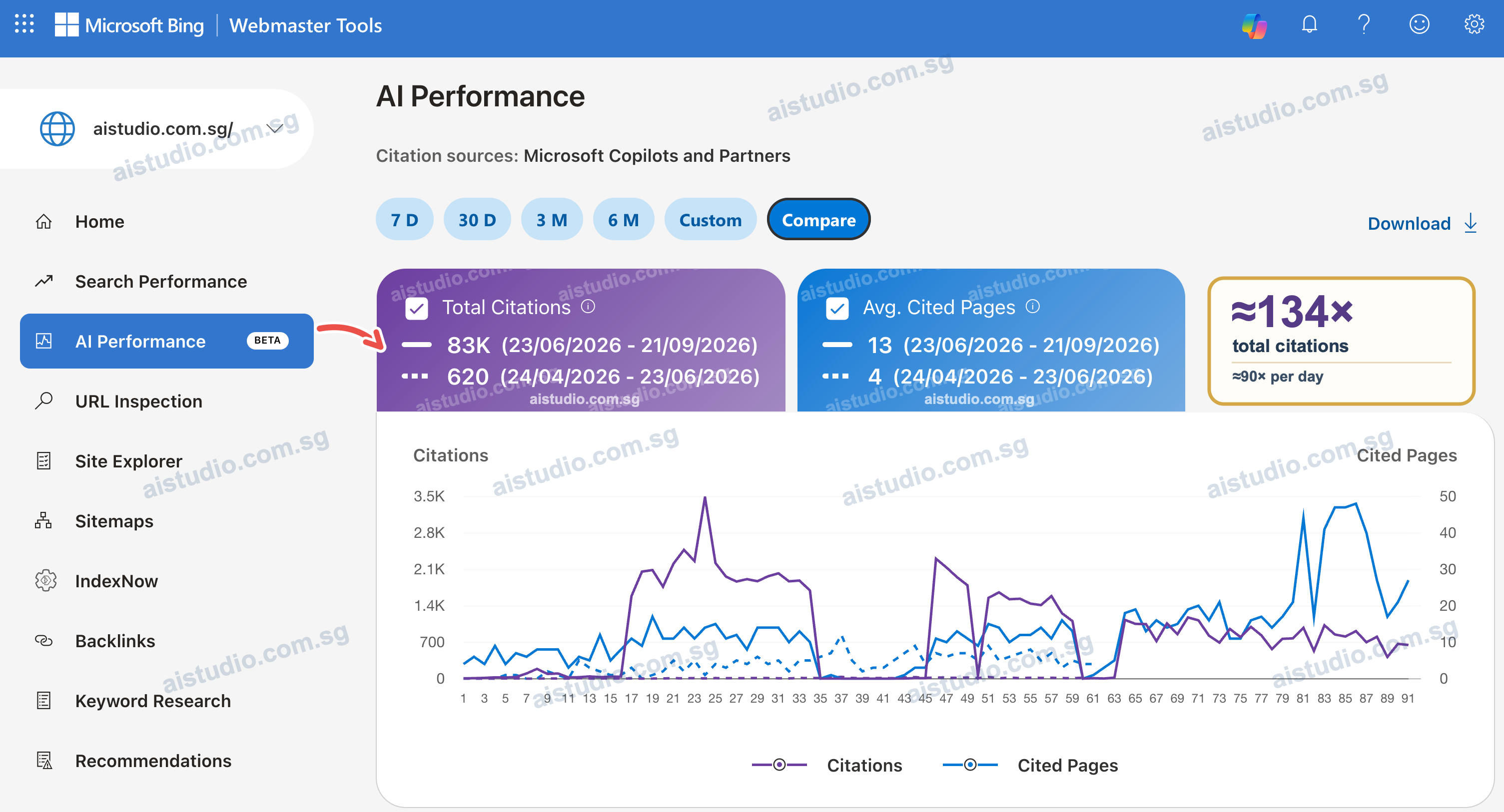
Our own Bing Webmaster Tools AI Performance screenshot shows 620 source citations in a 61-day period and 83K in a later 91-day period for aistudio.com.sg. The windows differ; those are Bing/Microsoft AI citation counts, not ChatGPT rankings, visits, leads or proof that one optimisation action caused the change. We use the evidence to explain what can be monitored and why source labels matter.

How to combine them without confusing the report
Build a single buyer-question map, then assign two delivery paths. A paid ad can send a buyer to a focused offer page. An organic guide can answer a wider question and link to the same useful offer. Both need factual claims and a good destination. Keep dashboards separate: paid spend, impressions and qualified conversions on one side; query samples, answer mentions, citations and organic traffic on the other. Review overlap as a hypothesis, not automatic attribution.
For an initial 30-day working plan, choose one market and one buyer decision; fix the landing page's missing facts; draft three distinct ad angles; verify campaign eligibility; establish a small query sample across relevant AI answer engines; and set a reporting baseline before judging change. The 30 days are a planning interval, not a promised ranking or campaign result.
What AI Studio can help with
AI Studio can prepare the buyer-question research, page and technical audit, answer-engine baseline, factual content plan, ad concepts and measurement structure. We can produce the creative and landing-page recommendations as a bounded first package, then scope implementation and monitoring from the baseline. The advertiser owns its account, approval decisions and media spend. If you want to see where your site stands, send us the domain and target market.
Frequently asked questions
Will buying ChatGPT Ads put my brand in ChatGPT's answer?
No. OpenAI says sponsored ads are separate from answers and do not influence the answer content.
Can AI Studio guarantee a number-one AI answer ranking?
No. Answer systems vary by question, user context, market and time. We can document a baseline, improve source material and report observed change.
Is a Bing AI citation a ChatGPT citation?
No. Bing Webmaster Tools' AI Performance data covers Microsoft Copilot and participating experiences. Label each platform's evidence separately.
Should a new advertiser do paid ads or organic work first?
Check the offer, destination and measurement first. If the page lacks core product facts, fix it before sending paid traffic. The right sequence depends on budget and the buyer decision.
Can the same content support both?
Yes. A clear factual landing page can support an ad's click journey and supply useful information for organic discovery, but performance must be measured separately.